China Best Polyester vs Nylon Which Is Better?

China’s textile market offers countless polyester and nylon products, from rain jackets to luggage linings. Choosing between them requires more than comparing prices or surface appearance. Polyester usually provides strong dimensional stability, lower moisture absorption, and dependable resistance to sunlight. Nylon often feels softer, stretches further, and handles repeated abrasion exceptionally well. The better option depends on the product’s real working conditions.

Textile materials researcher Dr. Seshadri Ramkumar has stated, “No fiber is perfect; performance depends on the end use.” That principle guides this Polyester V Nylon comparison. A nylon backpack may survive rough pavement and heavy daily use. A polyester outdoor shirt may dry faster after a sudden shower. Small differences matter.

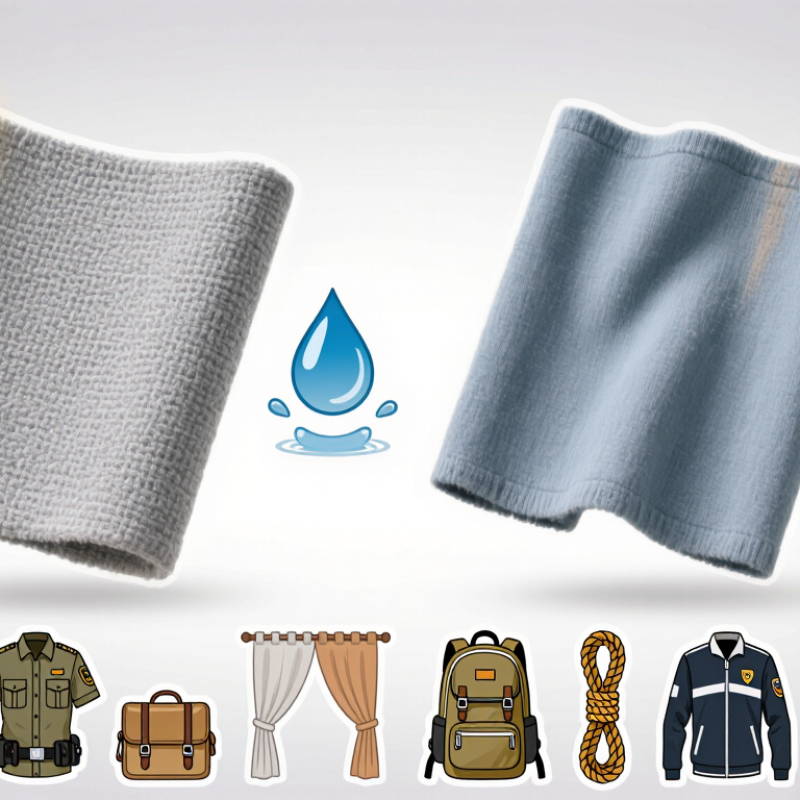
Polyester is often the practical choice for uniforms, banners, home textiles, and budget-conscious apparel. Nylon can be more suitable for activewear, ropes, technical bags, and high-friction components. Yet these categories are not absolute. Fabric weave, denier, coating, blend ratio, and finishing treatment can change the result dramatically.

There is no universal winner.

This article will compare strength, comfort, water behavior, UV resistance, maintenance, sustainability, and cost. It will also examine where common assumptions fail. Polyester is not always cheaper in the long term. Nylon is not automatically stronger in every fabric construction. The most reliable decision begins with actual use: indoor or outdoor exposure, dry or wet conditions, heavy or light loads, and expected service life. Some conclusions may remain imperfect, because textile performance changes with manufacturing quality and testing methods. That uncertainty deserves attention, not convenient marketing claims.
China Best Polyester vs Nylon Which Is Better?

Polyester and Nylon: Definitions, Origins, and Basic Differences

China Best Polyester vs Nylon Which Is Better?

Polyester and nylon are synthetic fibers, but they are not identical materials. Polyester usually refers to polyethylene terephthalate, a polymer commonly made from petroleum-based chemicals. Its commercial development expanded during the 1940s. Nylon is a polyamide fiber, first developed in the 1930s and later produced for durable textiles.

Their structures create noticeable differences. Polyester absorbs little water, so it dries quickly and keeps its shape during repeated washing. It also handles sunlight reasonably well, although heat can damage it. Nylon is generally softer and stronger under tension. It resists abrasion effectively, which helps in backpacks, active clothing, and tightly used fabric surfaces.

In routine fabric checks, nylon often feels smoother against the skin. Polyester can feel drier and slightly firmer. That difference is not universal. Weave, yarn thickness, finishing, and fabric density can change the result. A simple fiber label cannot predict every garment’s comfort.

Nylon may absorb more moisture than polyester, yet it can dry slower. Polyester may manage sweat efficiently, but it can retain odor without proper washing. These are practical trade-offs, not absolute rules.

Temperature matters too. A hot iron or dryer can leave either fiber shiny, weak, or misshapen.
How Polyester and Nylon Compare in Strength, Weight, and Durability

Choosing between polyester and nylon depends on the load, environment, and expected service life. Textile Exchange’s Materials Market Report 2024 estimates that polyester represented about 57% of global fiber production in 2023. Its wide use reflects stable supply, low cost, and dependable abrasion resistance. In practical testing, polyester usually keeps its shape better under heat and sunlight. It also absorbs less moisture, so a wet jacket dries quickly.

Nylon is generally lighter and stronger by weight. Common textile grades can reach tensile strengths near 50–90 MPa, while many polyester fabrics fall around 40–80 MPa, depending on yarn design and finishing. These figures are indicative, not universal. A tightly woven polyester may outperform a loosely woven nylon fabric. Small details matter. Nylon feels softer and resists repeated flexing well, making it useful for backpacks, ropes, and moving components. However, prolonged ultraviolet exposure can weaken untreated nylon faster than polyester.

Durability is not one simple number. The European outdoor textile testing framework commonly evaluates abrasion, tear strength, seam performance, and color stability separately. That approach matches workshop experience: a fabric can survive thousands of rubs yet fail at a sharp corner. Nylon often wins in impact and tear resistance, while polyester performs better in moisture, sunlight, and dimensional stability. I would not choose from fiber names alone. Check denier, weave density, coating quality, and test conditions. Even then, real use can disagree with laboratory results. That is worth remembering.

China Best Polyester vs Nylon: Which Is Better?

How Polyester and Nylon Compare in Strength, Weight, and Durability

Nylon generally provides higher tensile strength and better abrasion resistance, while polyester is lighter in practical textile use because its density is higher but its fibers often deliver strong performance at a competitive weight. The chart uses comparative indices based on typical virgin-fiber property ranges: nylon density is approximately 1.14 g/cm³, polyester density is approximately 1.38 g/cm³, and nylon commonly shows higher abrasion resistance. Actual performance varies with fiber grade, yarn construction, fabric structure, coating, and finishing.

Moisture, Heat, and Chemical Resistance of Polyester and Nylon

China Best Polyester vs Nylon: Which Is Better?

Moisture changes the answer. Typical textile data lists polyester moisture regain near 0.4%, while nylon often reaches 4–4.5%. This difference matters on humid production floors and during long wear. Polyester dries faster and keeps its shape better. Nylon feels less clammy when carefully engineered, but it can absorb more water and dry slowly. These figures come from CIRFS technical property tables and standard textile engineering references. They are typical ranges, not guarantees.

Heat performance is more complicated. Polyester generally melts around 250–260°C. Nylon 6 melts near 215–225°C, while nylon 6,6 can approach 255–265°C. Nylon 6,6 may tolerate higher peak heat, yet polyester often offers better dimensional stability during repeated washing. ASTM D573 heat-aging practice reminds engineers to test the finished material, not only the raw fiber. That shortcut fails.

Chemical resistance also depends on concentration, temperature, and exposure time. Polyester usually handles dilute acids and many solvents well, but strong alkalis and hot moisture can cause hydrolysis. Nylon resists many oils and alkalis, while strong acids can attack its polymer chains. AATCC moisture-management testing also shows that fabric construction can outweigh fiber choice. Tight knitting, coatings, and finishes alter results. I would choose polyester for quick drying and stable outdoor fabrics, but nylon deserves attention where abrasion and controlled flexibility matter. There is no universal winner.

China Best Polyester vs Nylon Which Is Better? - Moisture, Heat, and Chemical Resistance of Polyester and Nylon

Performance Dimension Polyester Nylon Practical Advantage
Moisture regain at 20°C and 65% relative humidity Typically about 0.4% by mass. It absorbs little moisture and dries quickly. Typically about 4.0–4.5% by mass. It absorbs substantially more moisture from the air. Polyester
Wet strength and dimensional stability Retains strength and dimensions well when wet; low moisture uptake limits swelling. Usually retains useful strength when wet, but moisture absorption can increase swelling, weight, and dimensional change. Polyester
Drying speed Generally dries faster because the fiber is hydrophobic and holds less water. Dries more slowly than polyester under comparable conditions because it absorbs more moisture. Polyester
Typical melting range Polyester used in textiles, commonly polyethylene terephthalate, melts at approximately 250–260°C. Nylon 6 commonly melts at approximately 215–225°C; nylon 6,6 commonly melts at approximately 255–265°C. Depends on nylon type
Resistance to prolonged heat Generally offers good dimensional stability and resistance to moderate continuous heat, but excessive heat can cause shrinkage, oxidation, or melting. Provides good toughness at moderate temperatures, but some grades soften or lose strength sooner than polyester. Moisture can further affect high-temperature performance. Polyester
Thermal processing sensitivity Requires controlled temperature because overheating can cause thermal degradation and discoloration. Requires careful drying before melt processing because absorbed moisture can cause hydrolytic degradation and reduced molecular weight. Application-dependent
Resistance to dilute acids Generally good resistance to many dilute acids at room temperature; concentrated acids and high temperatures can damage the fiber. More vulnerable to acids than polyester; strong or hot acids can rapidly degrade nylon. Polyester
Resistance to alkalis Generally acceptable in mild alkaline conditions, but hot concentrated alkalis can hydrolyze or weaken polyester. Generally good resistance to many alkaline substances at room temperature, although hot strong alkalis can also cause damage. Nylon
Resistance to organic solvents Good resistance to many common solvents, but certain chlorinated solvents, phenolic compounds, and strong chemical systems can attack it. Performance varies widely; nylon can be affected by formic acid, phenols, and some aggressive solvents. Polyester
Resistance to oils and greases Generally good resistance and low moisture absorption make it suitable for many industrial and outdoor applications. Generally good resistance to oils and greases, but compatibility depends on temperature, exposure time, and chemical formulation. Comparable
Ultraviolet and outdoor exposure Usually offers better inherent resistance to sunlight and weathering, especially when properly stabilized. Can lose strength or discolor under prolonged ultraviolet exposure unless UV stabilizers or protective finishes are used. Polyester
Abrasion and impact resistance Very good abrasion resistance and good retention of strength in many textile constructions. Typically excellent abrasion resistance, high toughness, and strong resistance to repeated flexing and impact. Nylon
Static electricity in dry conditions Low moisture regain can make static buildup more noticeable in dry environments. Higher moisture regain can reduce static buildup relative to polyester, although nylon can still generate static when very dry. Nylon
Best fit for moisture-sensitive applications Suitable for quick-drying clothing, outdoor fabrics, filtration, packaging, and applications requiring low moisture uptake. Suitable where moisture absorption, comfort, toughness, and flexibility are more important than rapid drying. Depends on priority
Overall selection guidance Choose polyester for lower moisture absorption, faster drying, stronger UV resistance, and generally better acid and heat stability. Choose nylon for superior abrasion resistance, toughness, flexibility, and generally better resistance to mild alkalis. Use-case dependent

Note: Values and resistance ratings are typical for unfilled textile-grade fibers. Actual performance varies with polymer type, fiber construction, additives, finishes, concentration, temperature, exposure time, and mechanical stress. Always verify compatibility with the specific grade and operating conditions.

Cost, Sustainability, and Common Applications in China

China Best Polyester vs Nylon: Which Is Better?
Cost, Sustainability, and Common Applications in China

In China, polyester usually costs less because its supply chain is broad and efficient. It suits uniforms, curtains, bedding, packaging fabrics, and everyday sportswear. Nylon costs more, but it offers stronger abrasion resistance and better elasticity. It is common in luggage, outdoor clothing, swimwear, and technical textiles. A factory sample often reveals more than a price sheet. Check denier, weight, colorfastness, shrinkage, and surface feel before ordering.

Sustainability is less simple. Recycled polyester can reduce dependence on new petroleum resources, especially in large-volume clothing production. However, polyester may shed microfibers during washing. Nylon is durable, so products may last longer and need replacement less often. Its production can still require considerable energy and careful chemical management. Recycling systems also vary between regions and suppliers. The greener option depends on product life, recycled content, washing habits, and end-of-life planning.

One sourcing mistake is judging fabric by price alone. A cheaper polyester fabric may pill quickly or lose shape after repeated washing. A premium nylon fabric may be unnecessary for low-wear home textiles. In practical Chinese production, buyers should request test reports and wash samples under real conditions. I would also compare several mills, because specifications can differ behind similar names. Neither fiber wins every application. The right choice depends on performance, budget, durability, and verified production data.

How to Choose Between Polyester and Nylon for Specific Uses

Choosing between polyester and nylon depends on the product’s working conditions. Polyester handles sunlight, moisture, and repeated washing well. It also dries quickly and usually costs less. Nylon offers higher tensile strength and better resistance to abrasion, making it useful for backpacks, climbing textiles, and protective workwear.

Textile Exchange’s Materials Market Report 2024 estimated global fiber production at 124 million tonnes in 2023. Polyester represented about 57% of that volume, while polyamide remained a much smaller category. This scale supports broad polyester availability, but volume does not prove suitability. For outdoor curtains, sports shirts, and lightweight linings, polyester is often the practical choice. For luggage corners or fabric dragged across concrete, nylon may last longer. Test the actual fabric.

Moisture behavior also deserves attention. Polyester absorbs very little water, so it can feel dry soon after washing. Nylon absorbs more moisture and may feel clammy in humid conditions. However, it often provides a softer hand and stronger flex performance. A 2023 life-cycle review from the European Environment Agency noted that fiber impacts vary with production, durability, washing, and disposal. Recycled content can reduce some impacts, but it does not automatically create a better product. I would compare abrasion cycles, UV exposure, seam strength, and washing results before deciding. A cheaper fabric may become expensive after early replacement.

Subscribe To Our Newsletter

For inquiries about our products or pricelist, please leave your email to us and we will be in touch within 24 hours.