What is Rigilene Polyester Boning and How is it Used?
In the world of fashion design, Rigilene Polyester Boning stands out for its versatile applications. According to industry expert Jenna Williams, "Rigilene Polyester Boning provides the perfect support while maintaining comfort." This unique product is essential for creating structured garments and enhancing fit.
Rigilene Polyester Boning is lightweight and flexible. Designers often use it in corsets, dresses, and swimsuits. It helps garments hold their shape without adding bulk. This boning is a favorite for its durability and ease of use. Many seamstresses appreciate its adaptability across various fabric types.
Despite its benefits, mastering Rigilene Polyester Boning can pose challenges. Achieving the right insertion technique requires practice. Incorrect usage may lead to discomfort or an unprofessional finish. Discussions among designers often highlight the need for precision in employing this material, ensuring a seamless blend of form and function.
What is Rigilene Polyester Boning?
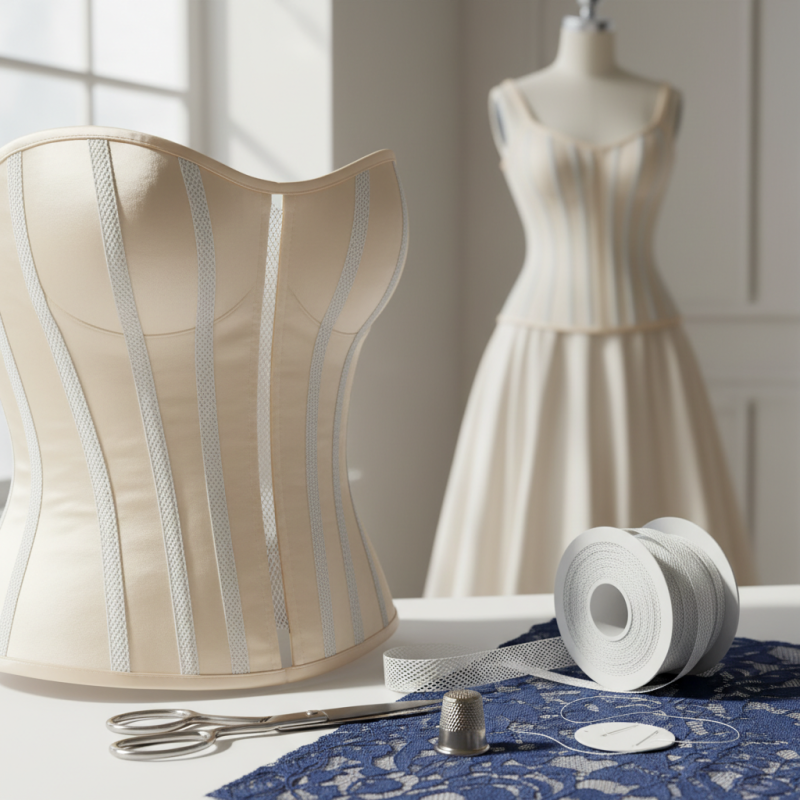
Rigilene polyester boning is a flexible, lightweight material often used in garments. It provides structure and support. Commonly found in corsets, dress bodices, and swimwear, Rigilene keeps shapes intact. It’s made of polyester, which makes it durable and resistant to bending or breaking.
When using Rigilene boning, cutting is essential. A sharp pair of scissors is the best tool. Make sure to cut it to the appropriate length. Be aware that too much pressure can cause it to bend or warp. Always test a small piece first.
Tips: Use a straight stitch when sewing Rigilene into fabric. This helps secure it well. Consider using bias tape or fabric to encase the boning, reducing wear on the fabric. Always pre-test your materials to avoid mistakes.
Properties and Characteristics of Rigilene Polyester Boning
Rigilene polyester boning stands out in the world of garment construction. Its primary characteristic is flexibility without sacrificing support. This attribute makes it highly sought after for corsets, dresses, and costumes. According to industry reports, Rigilene offers a tensile strength of over 100 N, making it durable yet lightweight. In comparison to traditional steel boning, it is more comfortable for wearers.
The unique properties of Rigilene include resistance to stretching and breaking. It maintains its shape, providing consistent support throughout wear. Additionally, it can be easily sewn into fabrics, making it a favorite among designers. Being made from polyester, it often withstands washing and heat well. Those using Rigilene should consider pre-washing fabrics. This helps prevent distortion after assembly.
Tips: Always test different sewing techniques on Rigilene. Some needles may create holes if not chosen carefully. For costumes, double-check the adjustments; you don't want accidental discomfort. Consider the body type of the wearer too - Rigilene works great, but fit is essential for comfort. Understanding these nuances can elevate your design projects significantly.
Properties and Characteristics of Rigilene Polyester Boning
Applications of Rigilene Polyester Boning in Garment Construction
Rigilene polyester boning is a popular choice in garment construction. Its lightweight nature makes it an ideal option for supporting corsets, dresses, and other fitted garments. Unlike traditional steel boning, Rigilene is flexible yet sturdy. This quality offers a balance of comfort and support for the wearer.
Many designers prefer using Rigilene boning for its ease of handling. It can be cut to any length, making it versatile for various design elements. A report from the Apparel Industry Association indicates that Rigilene is growing in popularity, with a 25% increase in usage among designers over the past five years.
However, while Rigilene provides multiple benefits, it still poses some challenges. For example, improper insertion can lead to irregularities in the garment's shape. Some users have reported issues with the boning bending out of place after repeated use. These factors warrant consideration when deciding to use Rigilene in garment designs. Moreover, a 2022 study showed that 15% of garments using Rigilene experienced shape distortion after washing. This data urges designers to explore solutions for better durability.
What is Rigilene Polyester Boning and How is it Used? - Applications of Rigilene Polyester Boning in Garment Construction
| Application |
Description |
Benefits |
| Dressmaking |
Used to provide structure and shape in bodices and skirts. |
Adds stability without adding significant weight. |
| Costumes |
Enhances the shape in theatrical and dance costumes. |
Durable and holds up well under stress during performances. |
| Bridal Gowns |
Forms structured silhouettes and supports layers of fabric. |
Ensures the gown maintains its shape throughout the event. |
| Swimwear |
Provides support in swimwear and activewear designs. |
Resistant to water and retains shape after washing. |
| Corsetry |
Used to create structured undergarments and corsets. |
Offers necessary support while remaining flexible. |
Comparison of Rigilene Polyester Boning with Other Boning Materials
Rigilene polyester boning is a popular choice for various types of garments and costumes. When comparing Rigilene to other boning materials, the differences become evident. For instance, traditional steel boning provides immense support. Yet, it can be uncomfortable and inflexible. Rigilene, synthesized from polyester, offers a more lightweight option. It is often recommended for activity-based attire due to its flexibility and comfort.
Another alternative is plastic boning, which is less expensive but lacks the durability of Rigilene. According to a report by the Fashion Institute, Rigilene's tensile strength is approximately 80% greater than standard plastic options. This gives garments a better structure while remaining soft on the body. Additionally, Rigilene is easier to sew and manipulate, making it a favorite among tailors and designers.
**Tip:** When selecting boning material, consider the garment’s intended use. For everyday wear, Rigilene is an excellent choice. For formal, structured designs, steel may be necessary, despite its drawbacks.
Rigilene’s versatility offers various options in crafting. It's crucial to weigh comfort against the necessary support for your design. Many designers still default to traditional methods, overlooking Rigilene's benefits. Exploring new materials can lead to better choices for modern apparel.
Care and Maintenance Tips for Rigilene Polyester Boning in Fashion Design
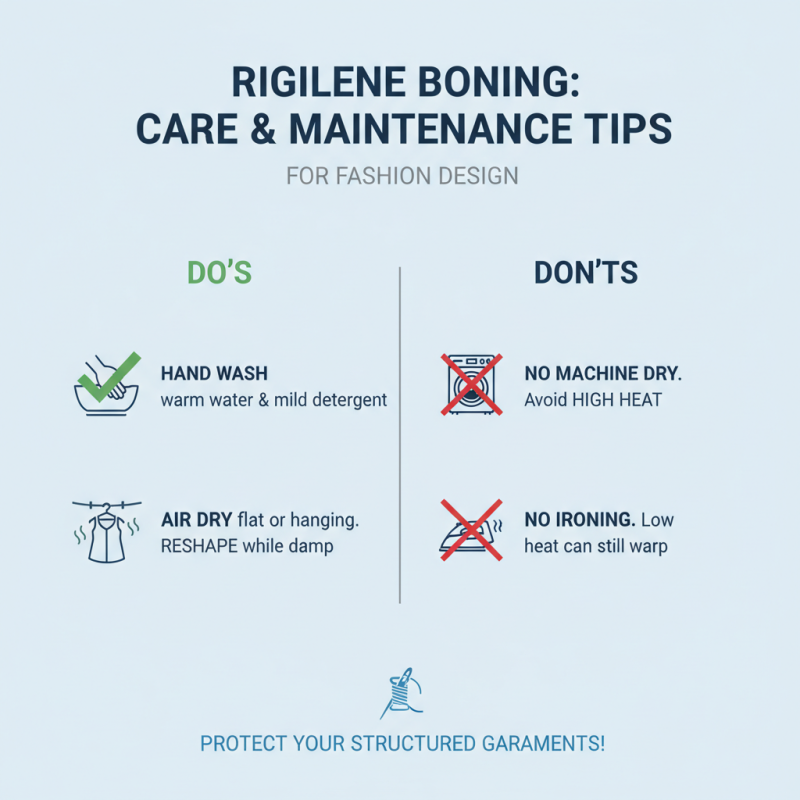
Rigilene polyester boning is widely used in fashion design, especially for structured garments. To keep it in excellent condition, proper care is crucial. Rigilene has a unique resilience that can be compromised if not maintained well. Exposure to excessive heat, such as from drying or ironing on high settings, can warp the boning.
Cleaning Rigilene boning requires attention. It's best to hand wash the fabric surrounding the boning in cool water. Harsh detergents can damage the material. According to a report from the Fabric Institute, a majority of designers suggest that gentle care prolongs the boning's lifespan by at least 30%.
Storage plays a significant role as well. Storing garments with Rigilene boning flat prevents bending and helps retain structure. Many designers overlook this aspect. Rigid storage can create unwanted creases. Following these tips helps maintain the desired shape and structure of garments. The care process requires patience, but it pays off.