Choosing the right Rigilene Polyester Boning can shape a garment’s structure, comfort, and production reliability. For global buyers, the decision involves more than comparing prices or roll lengths. It requires careful attention to width, stiffness, surface finish, flexibility, and end-use performance.
This 2026 guide examines practical buying considerations for corsetry, bridalwear, lingerie, dance costumes, shapewear, and structured apparel. Rigilene Polyester Boning is valued for its lightweight support, clean appearance, and ability to maintain controlled shaping without adding excessive bulk. However, performance can vary between suppliers. Resin quality, cutting accuracy, packaging, and manufacturing consistency all deserve inspection.
Details matter.
Experienced buyers should request samples before approving large orders. A simple bend test can reveal brittleness, memory, or unwanted curling. Sewn samples may also show whether the boning slides smoothly into channels and remains comfortable against the body. Measurements should be verified, not assumed. Small differences in width can affect stitching, fit, and final appearance.
Reliable sourcing also includes traceable specifications, consistent batch control, and clear communication about tolerances. Buyers should review technical data, product samples, factory capabilities, and applicable market requirements. Certifications may be useful, but they should match the product and destination market rather than serve as decoration.
No single construction suits every garment. That is an easy point to overlook. A softer profile may suit lingerie, while bridal bodices often need firmer lateral support. This guide compares key options and practical evaluation methods, while acknowledging that real-world testing remains essential. Better decisions begin with evidence, not assumptions.
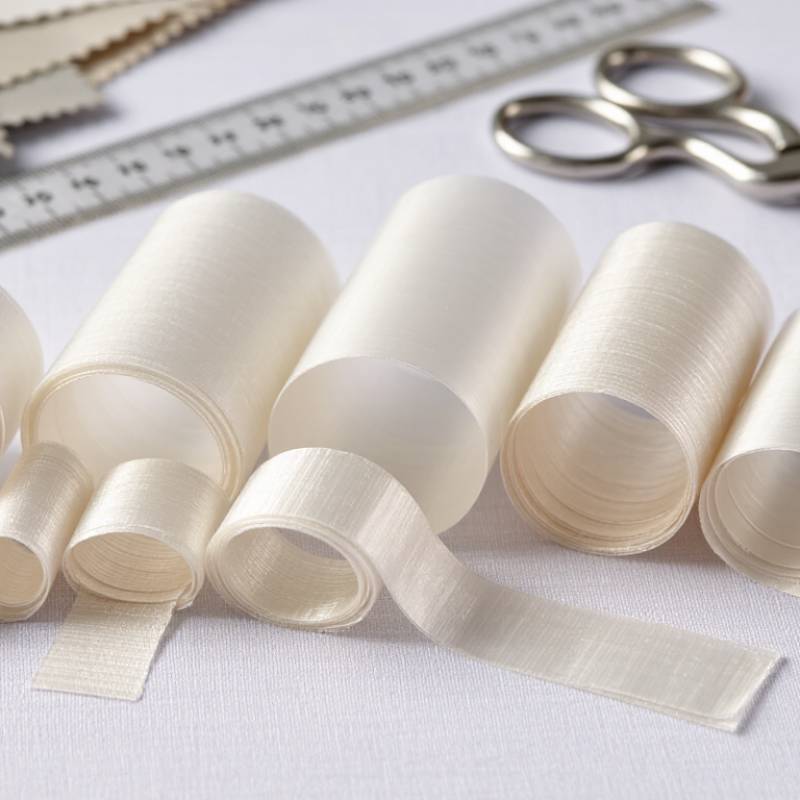
Rigilene polyester boning is a flexible support material used inside corsets, bodices, lingerie, and structured dresses. It usually contains narrow polyester ribs joined in an open mesh. The ribs bend with body movement, then recover their shape. This action supports fabric without creating the sharp stiffness associated with metal stays. It also helps prevent wrinkling along seams and keeps necklines or waist panels stable.
Its performance depends on structure, width, and installation. A wider strip distributes pressure across more fabric. Closely spaced channels offer stronger shaping, while wider spacing allows greater flexibility. Polyester also provides useful resistance to moisture and repeated handling. The Textile Exchange 2024 Materials Market Report recorded global fiber production at about 124 million tonnes in 2023, with polyester representing approximately 57%. That figure does not measure boning quality, but it shows why polyester remains important in apparel supply chains. Buyers should still request bend-recovery, shrinkage, and fatigue-test results. A material can look durable and perform poorly after repeated washing. That is an easy mistake.
Tips: Check the boning’s width against the channel size. Leave enough room for movement. Test a sewn sample before bulk production, especially around curved seams and high-tension areas. Also confirm composition, batch consistency, and care performance through documented supplier reports. Some suppliers provide limited data. Ask better questions.
For global garment buyers, Rigilene polyester boning should be selected by garment structure, not price alone. Its woven polyester construction offers flexible support, clean sewing, and lower rust risk than metal alternatives. Textile Exchange’s Materials Market Report 2024 states that polyester represented about 57% of global fiber production in 2023. This explains its strong supply availability, but recycled content and traceability still need verification.
Narrow 5–7 mm boning suits lingerie edges, bra wings, and lightweight swimwear.
Medium 8–12 mm widths provide controlled shaping for corsets, bridal bodices, and fitted eveningwear.
Wider 15–20 mm options work better in structured waist panels and heavier costumes.
Buyers should check width tolerance, thickness, stiffness, coil stability, and cut-edge behavior.
A practical sample test includes repeated bending, washing, pressing, and seam inspection.
A perfect specification sheet is not enough. Some boning feels stable in a sample but softens after heat exposure.
Tips: Match the boning width with seam allowance and fabric weight.
Test at least three suppliers using identical garment panels.
Request data for tensile strength, color fastness, shrinkage, and restricted substances.
The OECD Due Diligence Guidance and ISO-based textile testing practices can support supplier audits, although they do not replace product-specific testing.
Small details matter. A 1 mm width difference can change comfort, stitching accuracy, and the garment’s final silhouette.
2026 Best Rigilene Polyester Boning for Global Buyers
How to Evaluate Quality, Flexibility, Strength, and Safety
A reliable Rigilene polyester boning sample should have even width, clean edges, and a consistent surface. Hold it against a white background. Uneven color or tiny splits may reveal poor extrusion control. Measure several pieces from one batch, not just one attractive sample. Small differences can affect garment shape.
Flexibility needs practical testing. Bend a 30-centimeter strip around a smooth cylinder, then release it. Quality boning should recover without sharp kinks or permanent twisting. Test it inside the intended fabric, because lining tension changes performance. It should support structure without feeling stiff against the body. Too much softness can also cause rolling. That detail is easy to miss.
Strength requires more than a quick hand pull. Apply repeated bending and moderate tension, then inspect cracks near cut ends. A sample may pass once and fail after washing. I learned this after approving a piece that looked excellent but warped in production. My mistake was testing it alone. Safety checks should include smooth edges, low odor, stable color, and documentation for restricted substances. Ask for batch records, material information, and test conditions. Claims without traceable evidence deserve caution. Also review needle cutting, trimming dust, and heat exposure during manufacturing. Textile compatibility should be confirmed with real production samples, not assumptions.
Selecting Rigilene polyester boning in 2026 requires more than comparing prices. Global buyers should match width, thickness, and flexibility with the garment’s structure. Narrow boning suits curved seams and lightweight lingerie. Wider profiles provide stronger control in corsets, bridalwear, and structured costumes. Test both materials before placing a large order.
In my sourcing experience, recovery matters as much as stiffness. Bend a 30-centimeter sample repeatedly, then measure whether it returns to its original shape. Check the surface for rough edges, splits, and inconsistent thickness. These small defects can damage fabric during sewing. Request technical data for heat resistance, tensile strength, and dimensional tolerance. A supplier should also provide batch identification and stable packaging for humid transport conditions.
Do not rely on one attractive sample. It can hide production variation. Ask for samples from different batches when possible. Confirm spool length, cutting accuracy, color consistency, and compatibility with your sewing process. Some buyers overlook needle penetration and regret it later. I have found that a slightly softer grade may improve comfort, even when a firmer option appears more durable. That trade-off deserves testing. Select based on final garment performance, verified records, and realistic production conditions.
| Selection Criterion | Practical Data Range or Requirement | Best Choice for Global Buyers | Why It Matters | Recommended Verification |
|---|---|---|---|---|
| Material Composition | Polyester thermoplastic support, commonly supplied as a flexible, sew-through strip with longitudinal ribs. | 100% polyester preferred | Polyester provides a lightweight support structure, good resistance to moisture, and compatibility with many apparel and textile applications. | Request the technical data sheet, material declaration, and a representative sample. |
| Typical Width | Common commercial widths include approximately 5 mm, 7 mm, 8 mm, 10 mm, and 12 mm. Wider formats generally provide greater coverage and support. | 5–8 mm for light garments 10–12 mm for stronger support |
Width affects channel fit, garment appearance, sewing ease, and the amount of lateral stability provided. | Measure width with a calibrated ruler or digital caliper across several points of the roll. |
| Support Level | Choose among soft, medium, or firm constructions according to rib thickness, strip width, and bending resistance. There is no single universal stiffness scale for all suppliers. | Soft for flexible fashionwear Medium for corsetry and structured dresses Firm for high-support areas |
Incorrect stiffness can cause discomfort, garment distortion, broken channels, or insufficient shaping. | Compare samples using the same strip length and record the force or deflection method used. |
| Length Supply | Usually supplied in continuous rolls or cut lengths. Roll length varies by supplier, width, packaging format, and order specification. | Continuous roll for production Pre-cut lengths for small-batch work |
Continuous material reduces joining points and improves cutting efficiency in industrial production. | Confirm net length per roll, tolerance, splice policy, and the number of joints permitted per roll. |
| Dimensional Tolerance | Specify tolerances for width, thickness, cut length, rib spacing, and roll length in the purchase specification. Tolerances must be agreed with the supplier before production. | Written tolerance required | Consistent dimensions help prevent problems with sewing channels, pattern placement, automated cutting, and final fit. | Use an approved sample and an inspection plan based on measured production lots. |
| Bend Recovery | The strip should return toward its original shape after normal bending without permanent kinking, cracking, or surface splitting. | High recovery for repeated movement and close-fitting garments | Good recovery helps maintain garment structure after wearing, folding, and laundering. | Perform repeated bend-and-release checks using a defined bend radius and cycle count. |
| Edge and Surface Finish | Edges should be smooth and free from sharp flash, burrs, cracks, exposed fibers, or irregular cut marks. | Smooth edge Uniform surface |
Rough edges may damage fabric, create visible ridges, or cause discomfort to the wearer. | Inspect under adequate lighting and rub samples against the intended fabric for snagging or abrasion. |
| Sewing Compatibility | Confirm compatibility with the intended boning channel, needle size, stitch density, seam allowance, and sewing speed. | Channel-fit verified | Material that is too wide, too rigid, or too thick can shift during sewing or damage the channel. | Run a production-like sewing trial using the actual fabric, thread, machine, and stitch settings. |
| Heat and Finishing Exposure | Polyester has a high melting range compared with many apparel fibers, but the finished boning should still be evaluated against the actual ironing, pressing, molding, and heat-setting process. | Process-tested | Excessive heat, pressure, or prolonged exposure can deform the strip or alter its recovery. | Request the supplier’s recommended processing temperature and conduct a heat-exposure trial using the final production settings. |
| Laundry and Moisture Resistance | Polyester is generally resistant to moisture absorption and commonly used in washable textile products, subject to the construction and finishing process. | Wash-test approved | Dimensional change, distortion, discoloration, and loss of recovery can affect the finished garment after care cycles. | Test the complete garment or a representative sewn panel according to the target care label. |
| Color and Appearance | Common production colors include white, black, and neutral shades. Color requirements should be matched to the garment and visibility of the channel. | Color matched to application | A suitable color reduces show-through and helps maintain a clean appearance in lightweight or semi-transparent fabrics. | Approve a physical color sample under standard store and daylight conditions. |
| Compliance Documentation | For international sales, request applicable chemical and product documentation, including REACH-related declarations where relevant and market-specific test reports. | Documented supply chain | Documentation supports customs clearance, buyer audits, restricted-substance reviews, and marketplace requirements. | Check document scope, issue date, test method, material description, and whether the report covers the supplied construction. |
| Packaging and Protection | Rolls should be protected from crushing, moisture, contamination, and deformation during storage and international transport. | Moisture-protected Crush-resistant packaging |
Improper packaging may create flattened sections, kinks, contamination, or inaccurate roll-length counts. | Define carton dimensions, roll core requirements, labeling, gross and net weight, and packaging photographs. |
| Quality-Control Plan | At minimum, inspect appearance, width, thickness, roll length, bend recovery, splice condition, and packaging integrity. | Pre-shipment inspection | A documented inspection plan reduces variation between approval samples and mass-production deliveries. | Use an agreed sampling level, acceptance criteria, inspection record, and retained reference sample. |
| Best Application Match | Lightweight narrow boning is suitable for modest structure; medium widths are suitable for dresses and corsetry; wider or firmer options suit areas needing additional support. | Application-specific selection | The best specification depends on fabric weight, garment pattern, channel construction, wearer movement, and care method. | Approve the final specification only after prototype fitting, sewing evaluation, and laundering tests. |
For global buyers, sourcing Rigilene polyester boning starts with a precise product brief. Specify width, thickness, stiffness, length tolerance, edge finish, and color. Request samples from several factories, then test bending recovery after repeated use. A strip that feels firm today may soften after heat exposure or washing. Small differences matter.
Compliance needs country-specific review. Ask suppliers for material composition, restricted-substance declarations, batch records, and relevant test reports. Apparel applications may require additional checks for skin contact, color transfer, or laundering performance. Do not accept an undated certificate without confirming its scope. That shortcut can create expensive delays. Requirements change, too. Recheck them before each major order.
Packaging affects both quality and landed cost. Use coils or straight bundles according to the garment pattern, with separators that prevent scratches and permanent bends. Each carton should show size, lot number, quantity, and production date. Moisture-resistant inner bags help during ocean transport. Calculate more than the unit price: include tooling, inspection, inland freight, duties, payment fees, and carton volume. A cheaper strip can become costly when its minimum order quantity is too high. My practical preference is a pilot shipment, although it may not reveal every seasonal transport problem. Reconsider the specification after real production feedback.