Choosing reliable China Best Polyester Water Resistant Fabric Suppliers requires more than comparing catalog prices. Buyers must examine fabric performance, factory experience, and communication standards before placing an order. Polyester Water Resistant fabric may look similar across samples, yet coatings, weave density, and finishing methods can create major differences. A smooth surface does not always mean dependable protection.
Experienced suppliers should provide clear technical data, including fabric weight, width, hydrostatic pressure, breathability, colorfastness, and abrasion resistance. Ask for recent test reports and production samples. A practical evaluation starts with a small sample roll. Place it under light rain, fold it repeatedly, and inspect the coating afterward. Real use reveals weaknesses.
Not every supplier is equally transparent.
Reliable manufacturers explain their polyester source, coating process, and quality checkpoints. They should also discuss minimum order quantities, lead times, packaging, and customization options without avoiding difficult questions. Factory audits, third-party inspections, and verified export records can strengthen purchasing decisions. These steps cannot remove every risk. They can reduce preventable surprises.
Some buyers focus too heavily on water resistance alone. That approach may overlook tearing, seam leakage, odor, or poor color stability. A stronger sourcing process considers the final application, climate, washing method, and expected service life. Certification requirements may also vary by market and product category. For this reason, supplier selection should combine documented evidence with direct communication and hands-on testing. A trusted Chinese supplier is not simply the cheapest option. It is a manufacturing partner that delivers consistent fabric quality, realistic claims, and responsive support. Mistakes still happen, so careful review remains essential.
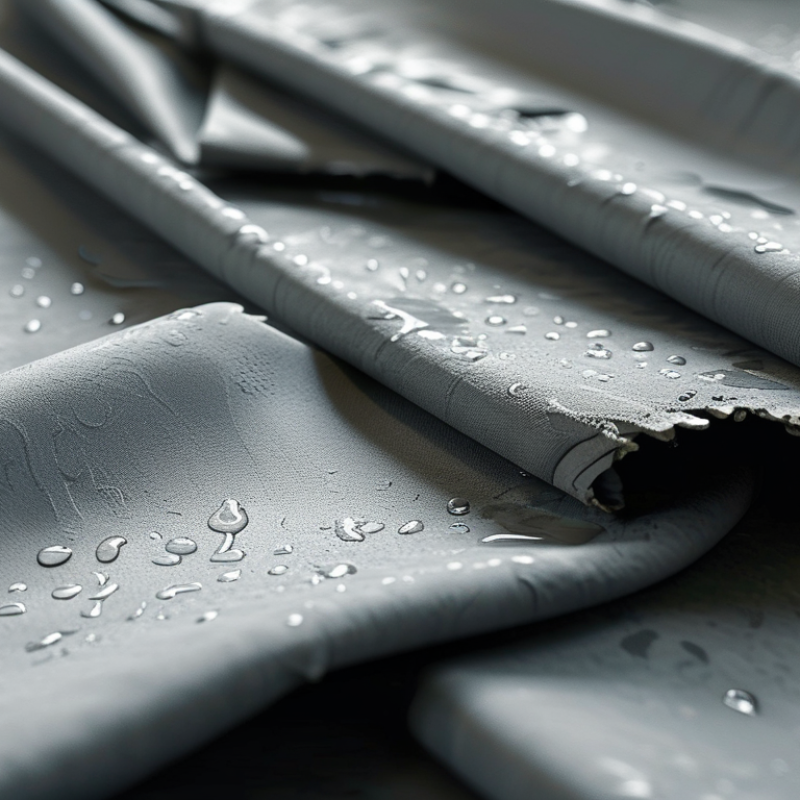
Polyester water-resistant fabric is a textile that slows water penetration, rather than blocking water completely. Its fibers are naturally hydrophobic, but yarn density, weave structure, surface coating, and seam design control real performance. A tightly woven polyester fabric may shed light rain, while an uncoated mesh can absorb water quickly. The difference is easy to miss.
The Textile Exchange Materials Market Report 2024 recorded about 124 million tonnes of global fiber production in 2023. Polyester represented roughly 59%, or nearly 73 million tonnes. This scale explains its wide use in outdoor clothing, bags, covers, and industrial textiles. However, high production volume does not prove water resistance. Suppliers should provide test evidence, not only fiber descriptions. AATCC TM22 and ISO 4920 evaluate surface wetting through spray tests. ISO 811 measures resistance to hydrostatic pressure, which is more relevant to waterproof fabric claims. These tests answer different questions.
In practical sampling, I check the fabric face after several water drops, then inspect the reverse side under light. Small needle holes and uneven coatings often appear there. A finish may also weaken after washing, folding, or abrasion. This is where specifications can become overly confident. Water-resistant polyester is useful, but its performance depends on construction, finishing, and maintenance. Ask for test conditions, washing cycles, fabric weight, and coating thickness before comparing suppliers.
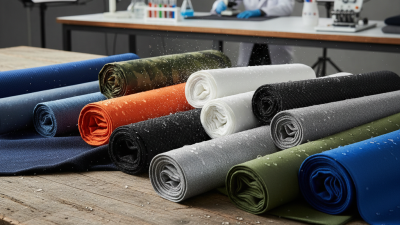
Choosing polyester water-resistant fabric suppliers requires more than comparing prices. The key evidence lies in performance data, repeatable testing, and clear production records. In practical sourcing, fabric should resist light rain, dry quickly, and retain strength after repeated handling. Water resistance is not waterproofing. A fabric may pass a spray test yet leak under pressure or through poorly sealed seams. Ask for hydrostatic-pressure results, spray ratings, GSM, yarn denier, and coating specifications.
Common fabric types include polyester taffeta, pongee, Oxford, ripstop, and microfiber. Taffeta feels light and smooth, making it suitable for linings, covers, and casual outerwear. Pongee offers a softer hand, while Oxford usually provides stronger abrasion resistance for bags and workwear. Ripstop uses reinforced grid yarns to limit tearing. Microfiber can feel dense and comfortable, but its finer construction may raise cost. These differences matter. A supplier should explain why a construction fits the end use, not simply recommend the highest coating weight.
Useful performance features include quick drying, dimensional stability, colorfastness, abrasion resistance, and controlled air permeability. For coated fabrics, check adhesion after washing, folding, and heat exposure. Request production samples, inspection standards, and batch-to-batch comparison data before placing a large order. I have seen attractive samples fail when bulk fabric showed uneven coating or inconsistent shade. That experience makes small-lot verification worthwhile. Still, laboratory results do not perfectly predict field use. Rain angle, washing habits, and seam design can change the outcome. A reliable supplier acknowledges these limits and helps refine the specification.
| Common Fabric Type | Typical Construction | Typical Weight Range | Water-Resistance Method | Typical Water-Resistance Performance | Main Performance Features | Common Applications |
|---|---|---|---|---|---|---|
| Polyester Taffeta | Plain weave; smooth surface and compact yarn arrangement | 60–120 g/m² | Durable water-repellent finish; optional PU coating | Light to moderate rain resistance | Lightweight, smooth, quick-drying, easy to print and pack | Umbrella covers, lightweight jackets, linings, sleeping-bag shells and promotional products |
| Polyester Oxford | Basket or Oxford weave; commonly 210D, 300D, 420D or 600D | 120–380 g/m² | PU, PVC or TPU coating; surface DWR may be added | Moderate to high resistance | Higher abrasion resistance, good tear strength, stable structure and practical durability | Bags, backpacks, outdoor covers, tents, luggage and workwear |
| Polyester Ripstop | Woven grid pattern with reinforced yarns at regular intervals | 70–180 g/m² | DWR finish or thin PU coating | Light to moderate rain resistance | Helps limit tear propagation, lightweight, compact and suitable for technical products | Windbreakers, outdoor equipment, kites, tents and lightweight bags |
| Polyester Canvas | Dense plain or panama weave with a firm hand | 250–600 g/m² | PU, PVC or acrylic coating; optional water-repellent finish | Moderate to high resistance | Heavy-duty construction, good dimensional stability and strong abrasion resistance | Awnings, outdoor furniture covers, equipment covers and industrial tarpaulins |
| Polyester Microfiber | Very fine denier yarns with a dense, soft surface | 80–180 g/m² | DWR finish, lamination or breathable membrane | Light to moderate resistance | Soft hand feel, wind resistance, low bulk and good moisture-wicking potential | Rainwear, travel clothing, sportswear and casual outerwear |
| Polyester Fleece with Water-Resistant Face | Knitted fleece structure with a treated or laminated outer face | 180–350 g/m² | DWR finish or bonded weather-resistant face fabric | Water-resistant, not fully waterproof | Warmth, softness, breathability and improved protection from light precipitation | Outdoor jackets, blankets, pet products and cold-weather accessories |
| Coated Polyester Shell | Woven polyester base with continuous PU, PVC or TPU coating | 150–450 g/m² | Continuous coating, taped seams or laminated construction | High to very high resistance | Strong barrier against liquid water; performance depends on coating thickness and seam sealing | Rainwear, protective covers, tents, dry bags and outdoor shelters |
| Polyester Membrane Fabric | Face fabric bonded to a microporous or monolithic waterproof membrane | 120–300 g/m² | Waterproof-breathable membrane with seam-taping option | High waterproofing potential | Balances water protection and moisture-vapor transmission; requires controlled bonding | Technical rain jackets, mountaineering apparel, cycling clothing and workwear |
| Performance values are typical industry ranges rather than guaranteed specifications. Final results depend on yarn size, fabric density, coating or finish chemistry, hydrostatic-pressure testing, washing durability, seam construction and inspection standards. For supplier comparison, request laboratory data for hydrostatic pressure, spray rating, air permeability, breathability, colorfastness, abrasion resistance and after-washing performance. | ||||||
A reliable polyester water-resistant fabric supplier should prove performance, not merely describe it. Textile Exchange’s 2024 Materials Market Report states that polyester represented 57% of global fiber production in 2023. This scale makes supplier screening especially important. Request a recent technical data sheet, fiber composition, fabric weight, width, coating type, and production batch number. Check whether water resistance means a spray finish, coating, or laminated structure. These are not equivalent.
Ask for test results based on ISO 4920 or AATCC 22, with the test date and laboratory details. Also request hydrostatic pressure results when rain protection matters. A high initial spray rating can still decline after washing, abrasion, or heat exposure. Test it yourself. Cut samples from different rolls, wash them according to the intended care process, then observe wetting under steady droplets. I have seen attractive samples fail at the seam.
Supplier reliability also depends on process discipline. Review inspection records, color-control methods, coating consistency, and corrective-action reports. Textile Exchange reports that recycled polyester accounted for about 12% of global fiber production in 2023, so recycled content claims should include transaction records or recognized certification evidence. Ask how defects are handled, not only how they are prevented. Response speed matters, but written evidence matters more. A factory visit can reveal uneven coating lines, poor storage, or damp cartons. Still, one visit is not proof. Repeat testing before placing a large order.
China’s strongest polyester water-resistant fabric clusters sit along the eastern and southern coasts. Zhejiang, especially Keqiao, is known for dense weaving, dyeing, coating, and finishing capacity. Jiangsu offers technical textiles and high-volume polyester production. Fujian and Guangdong support sportswear, outdoor goods, and export-focused manufacturing. However, regional labels can mislead. Factory capability varies by production line, not only by province.
Supplier categories deserve equal attention. Integrated mills control yarn, weaving, dyeing, and water-resistant finishing. Coating specialists add PU, TPU, or acrylic layers for stronger weather protection. Trading companies provide wider selections, but their technical control may be weaker. OEM manufacturers can develop fabric and finished products together. Textile Exchange’s 2024 Materials Market Report recorded global fiber production at about 124 million tonnes in 2023, with polyester representing roughly 57%. This scale explains China’s broad supplier base, but it does not guarantee consistent quality. Ask for batch records and recent test reports.
Tips: Request a 1–3 metre trial lot before negotiating bulk orders. Check hydrostatic pressure under ISO 811 and spray performance under ISO 4920. Test the fabric after washing, folding, and abrasion. A finish that looks excellent on day one may decline quickly. Confirm GSM, yarn count, width tolerance, colorfastness, and recycled content claims. I would also compare two regional suppliers, even when one quote appears clearly cheaper.
China Best Polyester Water Resistant Fabric Suppliers?
Polyester water-resistant fabric suits outdoor furniture, awnings, rain covers, workwear, and lightweight bags. Its tightly woven surface can resist brief rain, splashes, and damp storage conditions. It is not fully waterproof unless coated, laminated, or seam-sealed. That distinction matters during product testing. Common options include PU coatings, PVC layers, and durable water-repellent finishes. Each choice affects softness, breathability, abrasion resistance, and product lifespan. Experienced suppliers should provide test data, not only attractive sample photos.
Pricing depends on fabric weight, yarn quality, coating thickness, color, width, and order quantity. Special colors may require extra dyeing fees or minimum quantities. Small orders often carry higher unit prices. Ask for a clear quotation with packaging, sampling, testing, and delivery costs listed separately. Prices can change with raw material markets. A cheap offer may hide weak coating adhesion. Small mistakes happen.
Purchasers should request samples matching the final production specification. Check water resistance after folding, rubbing, washing, and outdoor exposure. Ask for hydrostatic pressure, colorfastness, tear strength, and coating adhesion reports. Confirm whether the stated fabric width is usable width or edge-to-edge width. Review production capacity, inspection procedures, lead times, and communication records. A factory audit or independent inspection can reduce uncertainty. I would also compare at least three suppliers before choosing. The lowest price is rarely the complete cost. Agree on tolerances, defect handling, and replacement terms in writing.
Indicative FOB price benchmarks by application, shown in USD per meter
Typical pricing increases with fabric weight, coating complexity, hydrostatic-pressure performance, color requirements, order quantity, and testing or certification needs. Lightweight outdoor apparel fabrics are generally less expensive, while coated tent, upholstery, and industrial-cover fabrics require more material and finishing processes. These figures are indicative purchasing benchmarks rather than supplier quotations.