Choosing a polyester water tank manufacturer in China involves more than comparing prices or browsing product photos. Global buyers need tanks suited to their water quality, climate, installation site, and storage demand. Polyester Water systems may use fiberglass-reinforced plastic, but material specifications and construction methods can differ between suppliers. Ask for clear information about resin type, wall thickness, fittings, tank dimensions, and stated operating limits.
The details matter. A tank installed outdoors in strong sunlight may need different protection from one placed inside a utility room. For drinking-water use, request current documentation showing that the specific product is suitable for that application in your destination market. Also review drawings, inspection records, installation instructions, packaging plans, and expected production times. These practical documents can reveal more than a polished catalog.
Not every manufacturer will be the right fit. Some may offer extensive customization but longer lead times; others may have standard models that ship more quickly. Buyers should confirm who handles technical questions, replacement parts, and after-sales support before placing an order. A video tour or sample inspection can help, though neither replaces checking written specifications. There is no perfect checklist. The right supplier is the one whose capabilities match the project and whose claims can be verified.
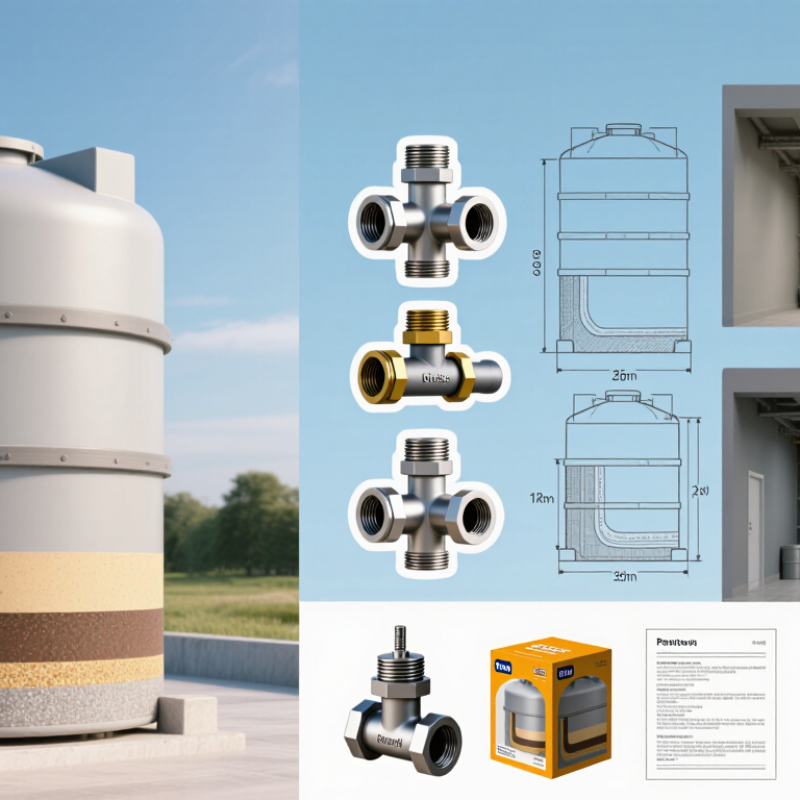
Polyester water tanks are commonly made from glass-fiber-reinforced polyester, a composite that combines resin with layers of glass reinforcement. The resin binds the structure, while the fibers help it resist pressure and handling loads. The exact performance depends on the lay-up, wall thickness, and workmanship. Details matter.
Tank design should match the site and the stored water. Cylindrical tanks suit many outdoor installations, while sectional tanks can be easier to move through narrow access points. A level, properly prepared foundation helps distribute the load across the base. In practical inspections, pay attention to joints, fittings, and signs of uneven support. Small installation errors can become expensive repairs.
Sun exposure, temperature changes, and water chemistry all affect material choice. An exterior gelcoat can help protect the surface from weathering, but it does not replace suitable maintenance. For drinking-water storage, buyers should request documentation showing that the materials are appropriate for that use and meet relevant local requirements. Polyester tanks serve farms, factories, commercial buildings, and emergency water systems.
Not always.
A large tank may be unsuitable where access, foundation capacity, or cleaning arrangements are limited. Check dimensions, access openings, outlet placement, and inspection needs before ordering.

A polyester water tank is commonly made from glass-fiber reinforcement and polyester resin, formed around a prepared mold. The mold sets the tank’s shape, wall profile, and surface finish. Workers clean it, apply a release agent, and add a gelcoat when a smooth inner surface is specified. Small details matter. Poor mold preparation can leave wrinkles or uneven patches that are difficult to correct later.
Next, layers of glass mat or woven reinforcement are placed into the mold. Resin is applied by hand or sprayed, then rolled through the fibers to remove trapped air and improve wet-out. Layer thickness and fiber direction are selected for the tank’s size, liquid load, and support conditions. Not every tank uses the same layup. After curing, the shell is released, trimmed, and fitted with openings, flanges, or supports. Rushing cure time is a real risk.
Inspection should check dimensions, visible voids, laminate consistency, and fitting alignment. A water-fill or other suitable leak test can reveal problems before shipment. For drinking-water use, buyers should confirm that materials and manufacturing controls meet requirements in their destination market. That detail is easy to overlook. Factory records help, though they cannot replace a careful inspection.
| Manufacturing Stage | What Happens | Materials or Process Details | Typical Quality Checks |
|---|---|---|---|
| 1. Tank design | The tank is designed around its capacity, installation site, water use, support conditions, and applicable local requirements. | Design decisions can include tank layout, panel configuration, reinforcement, fittings, access openings, and support framing. Specifications vary by product and project. | Review drawings, dimensions, intended use, design loads, and the required compliance documentation before production. |
| 2. Raw-material selection | Materials are selected to form the tank panels and, where required, provide a suitable water-contact surface. | Common materials for GRP/FRP tanks include polyester resin and glass-fiber reinforcement. Resin formulation and any food-contact or potable-water requirements depend on the intended application. | Check material identification, supplier documentation, storage conditions, and any required potable-water approvals for the finished product or wetted components. |
| 3. SMC preparation | For panels made by the sheet-molding-compound route, resin paste is combined with chopped glass fibers and other specified ingredients to make a moldable compound. | SMC is a fiber-reinforced thermosetting material. Its formulation and maturation conditions are controlled according to the compound and production process. | Monitor batch records, fiber distribution, compound condition, and storage or maturation time against the production specification. |
| 4. Panel molding | The compound is shaped into tank panels using a matched mold. SMC panels are commonly formed using heated compression molding. | Mold design creates the panel profile and any molded ribs or features. Temperature, pressure, and cure time are set for the material and equipment; there is no single universal setting. | Inspect panel shape, surface finish, dimensions, and molded features. Check for visible defects such as cracks, voids, or incomplete filling. |
| 5. Curing and finishing | After molding and cure, panels are removed from the mold and finished for assembly. | Finishing may include trimming edges, removing flash, and preparing connection or fixing points as specified by the tank design. | Check edge quality, hole positions, panel fit, and consistency with approved drawings and tolerances. |
| 6. Frame and component preparation | Structural supports and tank accessories are prepared for the planned configuration. | Depending on the design, components can include support members, fasteners, gaskets, tie rods, access covers, and inlet, outlet, overflow, or drain fittings. | Verify component materials, quantities, dimensions, and compatibility with the tank design and intended water use. |
| 7. Tank assembly | For a sectional tank, panels are aligned and fastened together on the prepared support structure. | Assembly sequence, fastening method, and tightening requirements follow the product design. Modular panels allow tanks to be assembled on site where the design permits. | Check alignment, joint continuity, fastener installation, support contact, and the completed tank geometry. |
| 8. Joint sealing and fittings | Seals and specified fittings are installed at panel joints and service openings. | Gaskets or other approved sealing materials are selected for the joint design and service conditions. Fittings are positioned according to the drawings. | Inspect seal placement, fitting orientation, and joint closure before the tank is filled for testing. |
| 9. Inspection and water testing | The completed tank is inspected, and a water-fill or leakage test is performed when required by the applicable specification or purchase contract. | Test conditions, filling level, duration, and acceptance criteria should be defined by the relevant standard, approved procedure, or project requirements rather than assumed to be identical for every tank. | Record test results and inspect joints, fittings, and panels for leakage, abnormal deformation, or other specified defects. |
| 10. Packing and shipment | Panels and accessories are protected and packed for transport, with the packing method suited to the shipment route and delivery conditions. | For tanks assembled at the destination, panels, fasteners, seals, and assembly instructions may be packed separately and identified by configuration. | Confirm the packing list, panel protection, accessory quantities, and availability of installation and maintenance documentation. |
Note: “Polyester water tank” commonly refers to a glass-fiber-reinforced polyester (GRP/FRP) tank. Manufacturing methods, materials, dimensions, and inspection requirements vary by design and intended use; confirm project-specific specifications with the supplier.
For polyester water tanks, quality begins with verified materials and design, not appearance. The WHO/UNICEF Joint Monitoring Programme’s 2023 report estimated that 2.2 billion people lacked safely managed drinking water in 2022, highlighting the value of dependable storage. For potable-water use, check whether wetted materials meet NSF/ANSI/CAN 61 requirements. AWWA D120 is also a relevant design reference for fiberglass-reinforced plastic water tanks.
Ask suppliers for resin and reinforcement specifications, wall-thickness records, and documented hydrostatic test results. Inspect seams, fittings, and internal surfaces for voids, cracks, or exposed fibers. UV resistance matters outdoors; sunlight can degrade inadequately protected resin. A thicker wall alone proves little. Test methods, workmanship, and installation conditions matter too. This is where comparisons can get messy.
Tips: Request a traceable test report for the exact tank model. Confirm potable-water suitability and installation limits in writing. Check supports and anchoring before filling; a sound tank can still fail on a poor base.
These WHO guideline values provide reference limits for selected contaminants in drinking water. They are water-quality benchmarks, not product certification limits for polyester tanks. Buyers should also check applicable local regulations and verify that tank materials are suitable for contact with drinking water.
Source: WHO Guidelines for Drinking-water Quality, fourth edition incorporating the first and second addenda. Lead value is provisional.
Leading polyester water tank manufacturers for global buyers are judged by more than quoted capacity. WHO/UNICEF’s 2023 Joint Monitoring Programme report estimates that 2.2 billion people lacked safely managed drinking water in 2022. Storage is only one part of the answer, but dependable tanks can support supply where water is collected or delivered intermittently. Details matter.
Buyers should request drawings, laminate specifications, resin details, and documented quality checks. Ask how the tank resists ultraviolet exposure, temperature changes, and the stored water’s chemistry. For potable use, verify that materials and test documents meet requirements in the destination market. Check fittings, access covers, vents, and drain placement against the actual site plan. A perfect specification is rare; real sites have uneven pads and restricted delivery access. Those details can be missed.
Compare warranties and inspection records alongside price. OECD’s Global Plastics Outlook reports that global plastic production reached 460 million tonnes in 2019, highlighting why material choices and end-of-life planning deserve attention. Fiberglass-reinforced polyester tanks are composite products, so buyers should ask whether repair instructions and disposal guidance are available. Even experienced purchasers can compare prices too early. A low quote may exclude transport, installation support, or essential fittings. Ask for a complete scope, and clarify which checks are performed on each production batch.
Comparing polyester water tank manufacturers in China takes more than checking advertised capacity. Review the tank’s intended use, dimensions, resin type, reinforcement, and stated operating conditions. Ask for technical drawings and material data, then compare them against your project requirements. A lower price may reflect thinner construction or fewer accessories, but confirm this rather than guessing. Useful evidence includes inspection records, clear production photos, and written answers about quality checks. Details matter.
Product comparison should include fittings, access openings, support requirements, and maintenance needs. For outdoor installation, ask how the tank handles ultraviolet exposure and temperature changes. For water storage, confirm whether the materials suit the intended water and use; do not assume every polyester tank is appropriate.
Export service deserves equal attention. Check packing methods, loading plans, documentation support, production lead times, and how damage or specification changes are handled. Vague answers are a warning sign. Still, even a thorough review cannot remove every shipping or installation risk.
Tips
Send each supplier the same specification sheet. Request itemized quotations, recent inspection evidence, and a sample export packing plan. Compare response clarity, not just price. A small mismatch in outlet position can cause costly site adjustments.