- +86 13957580925
- 510515850@qq.com
- adela0928@163.com

China remains a major production base for Polyester Textile, serving apparel, home furnishing, sportswear, and industrial markets worldwide. Its manufacturers range from large vertically integrated mills to specialized fabric suppliers. This article introduces leading companies by examining practical indicators, rather than relying on popularity alone.
The evaluation considers fiber quality, weaving capacity, dyeing control, laboratory testing, and delivery consistency. Factory certifications can support trust, but documents require careful verification. A polished website is not proof of stable production. Buyers should request recent test reports, production samples, and clear information about raw material origins. Questions about recycled polyester content, color fastness, shrinkage, and minimum order quantities also matter.
Some manufacturers operate modern facilities with automated spinning lines, digital color matching, and organized inspection stations. Others compete through flexible sampling and small-batch service. The difference becomes visible in details, such as uneven fabric edges, inconsistent dye lots, or delayed sample revisions. These details can affect an entire collection.
This guide will compare notable Chinese Polyester Textile manufacturers through an evidence-based lens. It will consider industry experience, technical capability, export performance, product range, and communication quality. Rankings should not be treated as permanent. Market conditions change, and public information may remain incomplete. That limitation deserves attention. An informed buyer should still conduct independent audits, confirm compliance requirements, and test samples before signing a supply agreement. Real confidence develops through repeated performance, not attractive claims.
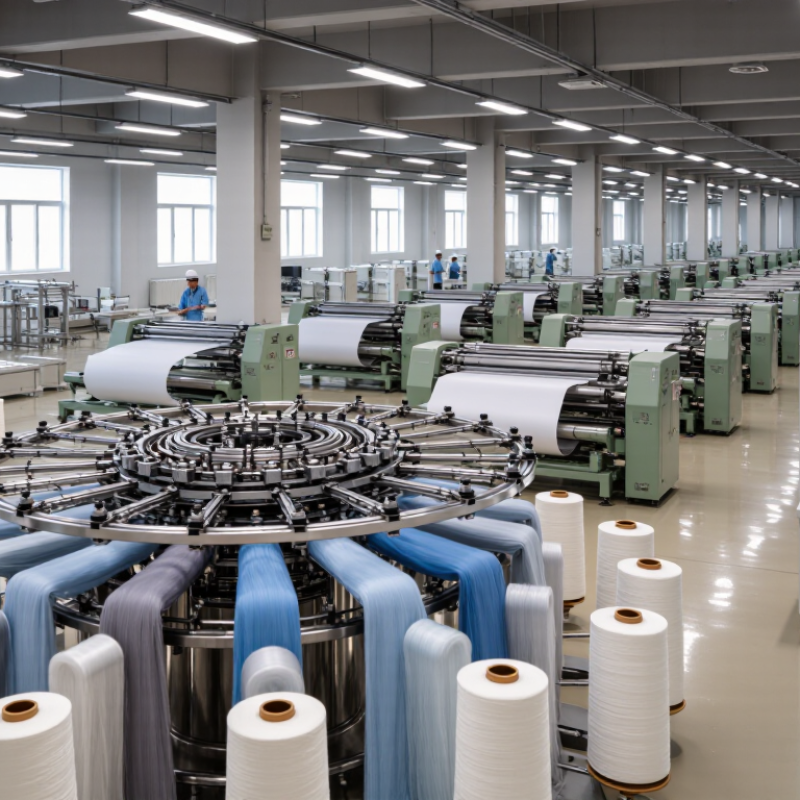
China’s polyester textile manufacturing industry spans polymer production, spinning, texturing, weaving, dyeing, and finishing. Large industrial clusters connect these stages within short transport distances. This structure supports stable supply and flexible order planning. It also creates intense competition.
Leading manufacturers usually offer more than large output. They manage denier control, filament strength, color consistency, shrinkage, and fabric weight. Modern facilities often use automated winding systems and digital inspection cameras. Laboratory teams test tensile strength, washing performance, colorfastness, and moisture management. Certificates help, but records matter more. Buyers should review test dates, batch numbers, and production samples before placing repeat orders.
A factory may produce bright sportswear fabric in the morning and heavy curtain fabric later. Changeovers reveal its real efficiency. Energy use, wastewater treatment, worker training, and traceable material sourcing also deserve attention. Recycled polyester is expanding, yet its quality can vary between batches. That point is easy to overlook. A low price may reflect efficient production, or weaker controls. Sometimes, both. Manufacturers with transparent specifications and responsive corrective-action reports are usually safer long-term partners. Still, even experienced buyers should inspect actual goods. A polished sample can hide uneven dyeing, loose edges, or unexpected shrinkage. Supplier performance needs regular review, not one successful shipment.
| Data Dimension | Industry Data | Reference Period | Industry Significance |
|---|---|---|---|
| Global manufacturing position | China is estimated to account for approximately 75%–80% of global polyester fiber production capacity. | 2023–2024 | China is the world’s largest polyester manufacturing base and a major source for international textile supply chains. |
| Total chemical fiber output | Approximately 70 million metric tonnes produced in China. | 2023 | Chemical fibers form a large part of China’s integrated textile and apparel manufacturing system. |
| Polyester share of chemical fibers | About 80% of China’s chemical fiber output is polyester-based, including filament, staple fiber and industrial yarn. | 2023–2024 estimate | Polyester is the dominant synthetic fiber category in China by production volume and downstream consumption. |
| Main production clusters | Zhejiang, Jiangsu, Fujian, Guangdong and Sichuan are important polyester and textile manufacturing regions. | Current industry structure | These regions provide concentrated access to polymerization, spinning, weaving, dyeing, logistics and export facilities. |
| Core raw materials | Purified terephthalic acid (PTA) and monoethylene glycol (MEG) are the principal feedstocks for PET polyester. | Standard polyester process | China’s large petrochemical and refining base supports vertically integrated polyester production. |
| Primary product categories | Polyester filament yarn, polyester staple fiber, industrial yarn, polyester chips, textured yarn and recycled polyester. | Current product portfolio | The broad product mix serves apparel, home textiles, technical textiles, automotive fabrics and packaging applications. |
| Common yarn specifications | Partially oriented yarn (POY), fully drawn yarn (FDY), draw-textured yarn (DTY), spun polyester and high-tenacity yarn. | Commercial product range | Manufacturers can supply products with different deniers, filament counts, lusters, cross-sections and functional finishes. |
| Recycled polyester capacity | China is one of the world’s largest producers of recycled polyester, using recycled PET bottles and post-industrial polyester waste. | 2023–2024 | Recycled materials support demand for lower-impact fibers and certification-based textile sourcing. |
| Typical quality certifications | Common certifications include ISO 9001, OEKO-TEX Standard 100, Global Recycled Standard and recycled-content chain-of-custody certifications. | Buyer-dependent | Certification requirements vary according to product use, destination market and sustainability claims. |
| Downstream applications | Sportswear, casualwear, outdoor fabrics, curtains, bedding, carpets, automotive interiors, filtration and industrial fabrics. | Current market applications | Polyester’s durability, low moisture absorption, dimensional stability and cost efficiency support broad usage. |
| Export coverage | Chinese polyester yarns and fabrics are exported to Asia, Europe, North America, Africa, the Middle East and Latin America. | Current trade pattern | Exporters benefit from China’s integrated ports, logistics network and established textile supply chains. |
| Main competitive advantages | Large production scale, integrated raw-material supply, extensive product selection, mature processing expertise and strong export infrastructure. | Industry assessment | These factors enable suppliers to serve both high-volume standard orders and customized functional textile requirements. |
| Key market challenges | Overcapacity in some product segments, raw-material price volatility, energy costs, environmental compliance and international trade restrictions. | 2023–2024 market conditions | Buyers commonly evaluate suppliers on consistency, traceability, lead time, compliance, technical support and total landed cost. |