The global search for Pp Polyester is growing, but the terminology remains surprisingly inconsistent. PP usually means polypropylene, while polyester commonly refers to PET. They are different polymers, with different melting points, moisture behavior, recycling routes, and end uses. A serious buying guide must separate them before comparing suppliers, specifications, or prices.
Scale matters. Textile Exchange’s Materials Market Report 2024 estimates that global fiber production reached 124 million tonnes in 2023. Polyester represented approximately 57% of that output, confirming its dominant position in apparel and industrial textiles. The same report identifies recycled polyester as a major development area, although feedstock quality and traceability remain uneven. PlasticsEurope’s Plastics—the Fast Facts 2024 also reports global plastics production of about 413.8 million tonnes in 2023. These figures show why polymer selection affects both supply security and environmental discussions.
This guide reviews ten widely purchased Pp Polyester types and related material categories. It considers staple fiber, filament yarn, spunbond, meltblown, industrial yarn, recycled PET, and performance-modified grades. Buyers should examine denier, tensile strength, shrinkage, moisture regain, certification, and batch consistency. A low price can hide unstable coloration or poor web strength. That happens.
The ranking is practical, not absolute. Climatic conditions, machinery, export requirements, and final applications can change the best choice. Supplier data also deserves independent verification through samples, laboratory testing, and documented chain-of-custody records. Some comparisons remain imperfect, because market terminology varies between regions. That limitation matters.
Global buyers often compare PP and polyester before choosing among ten common fiber types, including staple, filament, spunbond, meltblown, textured, recycled, and high-tenacity grades. The comparison changes quickly when density, moisture regain, and melting point enter the discussion.
PP typically has a density of 0.90–0.91 g/cm³. Standard polyester, usually PET, measures about 1.38–1.41 g/cm³. This difference affects fabric weight, yield, and shipping calculations. A PP fabric can feel surprisingly light. Polyester often delivers a denser, more substantial structure.
Moisture behavior is equally important. PP has almost zero moisture regain, often near 0.05%. It resists water absorption, but may build static and manage sweat poorly. Polyester generally shows about 0.4% regain. It dries faster than many natural fibers, although its surface can still feel damp. Melting points separate the materials sharply. PP commonly melts near 160–170°C. PET polyester usually melts around 250–260°C. Processing temperatures must match the selected grade, not just the fiber name. One mistake I have seen is treating all polyester as identical. That shortcut can distort costing and production trials. Buyers should verify density and melting data through current technical sheets and laboratory testing. Test conditions matter. Even published figures vary slightly with crystallinity, additives, and processing history.
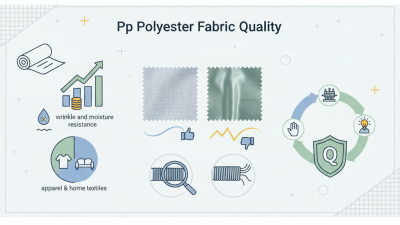
Typical reference values for common polypropylene and polyester material forms. Polypropylene has a lower density and moisture regain, while polyester generally offers a higher melting point. Values may vary by polymer grade, additives, crystallinity, and processing method. Moisture regain is shown at approximately 20°C and 65% relative humidity.
Global buyers often use “PP polyester” as a broad sourcing term, although polypropylene and polyester are different polymers. The first structural choices are PP homopolymer, PP copolymer, standard PET, and copolyester. Homopolymer PP offers stiffness and low density. Copolymer PP improves impact performance in colder conditions. Standard PET provides strength and dimensional stability. Copolyester can offer better flexibility, but its heat behavior needs careful testing. Polymer structure affects melting temperature, dye response, shrinkage, and long-term durability.
Fiber form creates another useful division. PP staple fiber is cut into short lengths for nonwoven blends and filling materials. Polyester staple fiber supports spunlace, needlepunch, and insulation applications. PP filament gives continuous strength with low weight. Polyester filament supports smooth fabrics and controlled appearance. Bicomponent fiber combines two polymers in one cross-section. It can create bonding or special crimp.
Processing method changes the final result. Spunbond PP forms continuous webs through extrusion and air drawing. Meltblown PP uses finer streams for filtration structures. Melt-spun polyester produces stable filaments with adjustable denier. Textured filament adds bulk and a softer hand. These categories overlap in real factories. They are not perfectly clean. A buyer should check melt flow rate, intrinsic viscosity, denier, tensile strength, shrinkage, moisture, and batch consistency. Small laboratory differences can become visible after washing or heat setting. Purchase decisions should follow application trials, not catalog language alone.
Global buyers often compare the top ten PP and polyester material types by fiber form, process, and end use. PP and polyester are different polymers, although suppliers sometimes discuss them together. Filament yarn uses continuous strands, giving fabrics smooth surfaces, stable strength, and low lint. Polyester usually offers better heat resistance and dimensional stability. PP is lighter and resists moisture well.
Staple fiber consists of cut fibers, often from 32 to 76 millimeters long. It can be carded, blended, or spun into yarn. Its handle depends on crimp, fineness, and finish. Spunbond creates continuous filaments directly on a moving web. It is common in packaging, hygiene, agriculture, and construction fabrics. Spunbond fabric normally feels stronger and more uniform than staple-based material.
Meltblown uses high-speed air to stretch polymer melt into very fine fibers. The web can capture small particles, but pressure drop and strength require careful balancing. Buyers should check melt flow rate, denier, basis weight, tensile data, and test conditions. I have seen specifications fail because “high strength” lacked a defined direction or testing method. That is a real weakness. Humidity, winding tension, and storage time can also change processing results. Sample trials should measure softness, web uniformity, filtration performance, and seal behavior under actual production settings. A low-cost grade may become expensive after line adjustments and rejected rolls.
Global buyers should compare PP and polyester by performance, not fiber name alone. Textile Exchange’s Materials Market Report 2024 estimates global fiber production reached 124 million tonnes in 2023. Polyester represented about 57% of output, showing its strong supply base and pricing influence.
For a practical ten-type screen, PP spunbond typically uses 1.5–4 denier fibers, with moderate strength and low cost for hygiene and geotextiles. PP staple fiber, around 3–15 denier, suits fillings and nonwoven blends. PP monofilament, commonly 100–1,000 denier, offers abrasion resistance for filters and nets. PP multifilament, often 100–600 denier, provides softer handling for ropes and woven fabrics. PP high-tenacity yarn costs more, but supports demanding industrial applications.
PET spunbond, usually 1.5–4 denier, delivers better heat stability than PP. PET staple fiber, around 1.5–15 denier, serves insulation, padding, and apparel. PET filament yarn, commonly 50–300 denier, fits clothing and technical fabrics. Recycled PET filament may reduce virgin-material demand, although quality consistency needs checking. High-tenacity PET, often 500–3,000 denier, supports conveyor belts, lifting textiles, and tire reinforcement. Cationic-dyeable PET improves color contrast but usually carries a cost premium.
According to the International Textile Manufacturers Federation’s 2024 survey, energy and raw-material volatility remain major purchasing concerns. Exact costs vary by region, order size, and certification. A cheaper denier can become expensive after breakage. My caution: strength data alone can mislead; test finished fabric, moisture, heat, and actual production speed.
Top 10 PP Polyester Types for Global Buyers?
Global buyers often group polypropylene and polyester together, but their performance differs. Common purchasing categories include PP staple fiber, PP filament, spunbond PP, meltblown PP, and textured PP. Polyester options include PET staple fiber, PET filament, textured PET, recycled PET, and polyester spunbond. Each type needs a clear end use, denier range, strength target, and shrinkage limit.
ISO 2076 helps confirm the generic identity of man-made fibers. It supports consistent descriptions for polypropylene and polyester during international sourcing. ASTM D629 provides chemical analysis methods for fiber blends. This matters when a material is advertised as pure polyester. A small blend can change dyeing, strength, and recycling results.
Testing data should show fiber content, linear density, tensile strength, elongation, moisture regain, and thermal shrinkage. Ask for test conditions, sampling methods, and laboratory dates. REACH documentation should address restricted substances and current regulatory requirements. A certificate alone is not enough. I have seen documents with correct-looking numbers but unclear samples. That gap deserves attention. Buyers should compare the report with the actual bale, yarn, or fabric lot. Color variation, uneven crimp, and damaged filaments can appear after shipping. Reliable suppliers explain these defects instead of hiding them. Standards guide the decision. Physical evidence confirms it.
Typical technical ranges for procurement screening; final acceptance should be based on the supplier’s current test report and applicable end-use requirements.
| Rank | Fiber Type | ISO 2076 Generic Name | Polymer / Structure | Typical Form | Typical Tenacity (cN/tex) |
Typical Elongation (%) |
Moisture Regain (%) |
Density (g/cm³) |
Melting Range (°C) |
Typical Applications | Relevant Fiber Tests | REACH / Buyer Checkpoint |
|---|---|---|---|---|---|---|---|---|---|---|---|---|
| 1 | Virgin PET Filament | Polyester (PES) | Polyethylene terephthalate; continuous filament | FDY, POY, DTY, monofilament | 3.5–6.5 | 15–35 | 0.4 | 1.38 | 250–260 | Apparel, home textiles, automotive fabrics, industrial textiles | ISO 1973 fineness; ASTM D3822 tensile; ASTM D3418 DSC | Verify dyes, finishes, catalysts, and restricted substances under REACH Annex XVII. |
| 2 | Virgin PET Staple Fiber | Polyester (PES) | Polyethylene terephthalate; cut fiber | Solid, hollow, crimped, siliconized | 3.0–6.0 | 20–45 | 0.4 | 1.38 | 250–260 | Spun yarn, nonwovens, filling, carpets, geotextiles | ASTM D1577 linear density; ASTM D3822 tensile; ISO 1973 | Check finish chemistry, antistatic agents, and SVHC communication obligations. |
| 3 | Recycled PET Fiber | Polyester (PES) | Reprocessed polyethylene terephthalate | Recycled filament or staple fiber | 3.0–6.0 | 18–45 | 0.4–0.6 | 1.38 | 245–260 | Sportswear, fleece, filling, packaging-related textiles | ASTM D629 composition; ASTM D3822 tensile; DSC; color and IV checks | Request recycled-content evidence separately; REACH compliance still applies to additives and finishes. |
| 4 | High-Tenacity PET | Polyester (PES) | High-orientation polyethylene terephthalate | Industrial filament yarn, cord, tape | 6.0–10.0 | 8–20 | 0.4 | 1.38 | 250–260 | Tire cord, conveyor belts, safety belts, reinforcement fabrics | ASTM D885 yarn tensile; ASTM D1577 linear density; thermal shrinkage test | Confirm finish formulation and any flame-retardant or adhesive chemistry. |
| 5 | Cationic-Dyeable PET | Polyester (PES) | Modified PET containing anionic dye sites | Filament or staple fiber | 3.0–5.5 | 20–40 | 0.4–0.6 | 1.37–1.39 | 245–258 | Mixed-color fabrics, knitwear, fashion textiles | ASTM D3822 tensile; colorfastness testing; DSC; fiber identification | Screen dye auxiliaries, dispersing agents, and residual monomers. |
| 6 | PET Microfiber | Polyester (PES) | Very fine polyethylene terephthalate fiber | Filament or split microfiber; typically below 1 dtex | 3.0–6.0 | 20–40 | 0.4 | 1.38 | 250–260 | Cleaning cloths, suede-like fabrics, filters, lightweight apparel | ISO 1973 fineness; microscopy; ASTM D3822 tensile; absorbency testing | Verify splitting agents, surface treatments, and microfiber-release requirements. |
| 7 | Low-Melt PET/Co-PET Bicomponent | Polyester (PES) | PET core with lower-melting copolyester sheath | Bonding staple fiber or filament | 2.5–5.0 | 20–50 | 0.4–0.7 | 1.35–1.39 | Sheath 110–190; core about 250–260 | Thermal-bonded nonwovens, padding, filtration, molded textiles | DSC; microscopy for cross-section; ASTM D1577; tensile testing | Confirm copolymer composition, processing temperature, and additive restrictions. |
| 8 | PBT Fiber | Polyester (PES) | Polybutylene terephthalate | Filament, staple, or monofilament | 3.0–5.0 | 20–50 | 0.2–0.4 | 1.31 | 223–230 | Stretch fabrics, swimwear, socks, elastic textile constructions | ASTM D3822 tensile; ISO 1973 fineness; ASTM D3418 DSC | Check elastomeric finishes, pigments, and product-specific chemical restrictions. |
| 9 | PTT Fiber | Polyester (PES) | Polytrimethylene terephthalate | Textured filament or staple fiber | 3.0–6.0 | 25–50 | 0.4–0.5 | 1.38 | 228–235 | Stretch apparel, carpets, home textiles, soft-touch fabrics | ASTM D3822 tensile; ISO 1973 fineness; DSC; crimp and recovery testing | Verify catalysts, colorants, finishes, and any SVHC declarations. |
| 10 | Polypropylene Fiber | Polypropylene (PP) | Isotactic polypropylene; polyolefin fiber | Staple, spunbond, meltblown, monofilament | 3.0–7.0 | 20–60 | 0.05 | 0.91 | 160–170 | Hygiene nonwovens, geotextiles, ropes, carpets, filtration | ASTM D3822 tensile; ASTM D1577 linear density; DSC; basis-weight testing | Confirm pigments, UV stabilizers, antimicrobial agents, and REACH Annex XVII status. |
Standards and Procurement Notes
ISO 2076 provides generic names for man-made fibers. ASTM D629 is used for quantitative analysis of textile fiber blends and is not a performance specification for a single polymer type.
Tensile values, elongation, density, moisture regain, and melting ranges are typical screening ranges for commercial fibers and can vary with denier, draw ratio, cross-section, finish, crystallinity, and test conditions.
Recommended buyer documentation: current certificate of analysis, fiber identification, linear density, tensile and elongation results, DSC or melting-point data, restricted-substance declaration, and REACH SVHC communication where applicable.