China has become a major sourcing destination for Pure Polyester fabric. Its supplier network serves apparel, home textiles, uniforms, and industrial applications. However, choosing a reliable manufacturer requires more than comparing online prices. Fabric performance begins with fiber quality, production control, and transparent communication.
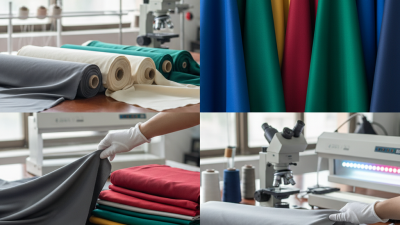
Experienced global buyers often inspect fabric samples before discussing large orders. They check GSM, width, weave density, color consistency, and surface feel. A roll may look smooth under showroom lights, yet reveal uneven dyeing during inspection. Suppliers should provide clear specifications, sample approvals, and practical production timelines. Independent laboratory reports can also support claims about colorfastness, shrinkage, abrasion resistance, and composition.
This guide examines China’s top Pure Polyester fabric suppliers through a buyer-focused lens. It considers manufacturing experience, export capability, quality systems, customization options, and after-sales support. Certifications matter, but certificates alone do not guarantee dependable shipments. A factory visit, video audit, or third-party inspection may reveal useful details. Ask about minimum order quantities, packaging methods, spare fabric, and handling of rejected rolls.
Some supplier information can change quickly. Websites may present outdated equipment or incomplete product ranges. That is worth remembering. Buyers should verify current capacity, testing documents, and delivery records before signing contracts. Small communication gaps can become costly problems later. With careful comparison and realistic expectations, global buyers can identify Chinese partners that offer stable Pure Polyester quality, consistent service, and commercially suitable solutions.
China Top Pure Polyester Fabric Suppliers for Global Buyers
Pure Polyester Fabric Defined: PET Fibers and a 59% Global Share (TE, 2024)
Pure polyester fabric is made entirely from polyester fibers, most commonly polyethylene terephthalate, or PET. Producers create PET fibers by melting polymer chips and spinning them into filaments or staple fibers. The result is a fabric with stable dimensions, quick drying, and strong abrasion resistance. It is widely used in apparel, linings, workwear, sports textiles, and home furnishings.
The Textile Exchange Materials Market Report 2024 states that polyester accounted for 59% of global fiber production in 2023. That figure shows its industrial scale, but not automatic quality. Buyers should request fiber-content tests, fabric weight, width tolerance, colorfastness results, and shrinkage data. Small specification gaps can cause serious production losses.
China-based suppliers often provide woven and knitted polyester fabrics in various weights, finishes, and constructions. Experienced sourcing teams should compare test reports with physical samples. PET quality can vary between virgin and recycled inputs. Recycled content may also affect shade consistency and strength. The Global Recycled Standard can help verify certified recycled claims, where applicable. Still, paperwork is not enough. A sample roll may behave differently after washing, coating, or heat setting. This is where supplier communication sometimes fails. Trial production remains necessary, even for seemingly simple fabrics.
Polyester, primarily made from PET fibers, represented approximately 59% of global fiber production in 2023. Based on Textile Exchange’s 2024 market data, total global fiber production was about 124 million tonnes; category volumes shown here are rounded estimates calculated from reported market shares.
China Top Pure Polyester Fabric Suppliers for Global Buyers
China’s Sourcing Position: Polyester Made Up 59% of Global Fiber Output (TE)
According to Textile Exchange data, polyester represented 59% of global fiber output. This figure explains China’s central role in polyester fabric sourcing. Its mills serve apparel, home textile, workwear, sportswear, and lining markets. Pure polyester means the fabric contains polyester as its fiber content, not a cotton blend. Buyers should confirm construction before comparing prices.
Experienced sourcing teams inspect samples before approving production. Small details matter. They compare yarn type, fabric weight, width, surface texture, and shrinkage. Suppliers should provide technical sheets and batch-based test records. These documents should state composition, GSM, colorfastness, tensile strength, and dimensional stability. I would not trust a quotation without measurable specifications. Paperwork is not proof. Independent testing can verify important claims, especially for large-volume orders.
Price remains important, but a low quote may hide uneven dyeing or unstable finishing. Ask for sample rolls, not only small swatches. Check shades under daylight and warehouse lighting. Production schedules also need written confirmation. Some suppliers communicate clearly before payment, then respond slowly during production. That risk deserves attention. In practical sourcing work, clear specifications reduce avoidable disputes. Still, no supplier is perfect. Leave room for corrective action, inspection, and realistic delivery adjustments.
Ranking pure polyester fabric suppliers requires more than checking a product catalog. GSM shows fabric weight and affects drape, strength, and shipping cost. Ask for laboratory-tested samples, such as 120, 180, or 240 GSM, before approving bulk production.
Width must match your cutting plan. Confirm usable width, selvage condition, and tolerance in writing. A supplier offering 150 centimeters may deliver less after finishing. This detail can create unexpected waste. MOQ also deserves careful review. A low MOQ may suit trial orders, but it can increase the unit price and limit color choices.
Production capacity should be measured with evidence, not confident claims. Request monthly output, current lead times, and a realistic production schedule. Visit records, inspection reports, and sample consistency reveal more than sales language. ISO 9001 certification indicates a documented quality system, but it does not guarantee flawless fabric. Check the certificate’s validity and scope, then inspect GSM, shade, width, and shrinkage on each shipment.
A practical ranking may assign weighted scores to these factors. For example, quality can receive 35 percent, capacity 25 percent, and MOQ 15 percent. Width and certification can share the remaining points.
This method is useful, though imperfect. Weighting changes with every buyer’s production needs. A garment factory may value shade consistency, while a home-textile importer may prioritize wider fabric.
Keep records from sample approval through final inspection. Mistakes still happen. Good suppliers explain them clearly and correct the process.
China’s pure polyester fabric suppliers should support every claim with current test records. ASTM D5034 measures grab tensile strength, revealing how fabric handles pulling during cutting and sewing. Ask for results by fabric lot, not a generic product sheet. Construction changes can affect performance.
ISO 105 Methods ISO 105 methods assess color fastness under specific conditions. ISO 105-C06 covers washing, while ISO 105-X12 examines rubbing. Testing should match the final use, such as uniforms, bedding, or outdoor panels. A dark fabric may pass washing but fail dry rubbing. That detail matters. Test samples should reflect the actual dye lot, finish, and weight. In practice, rushed sampling creates avoidable uncertainty.
Tips: Request sealed samples, test dates, laboratory details, and the exact standard versions. Check whether the report names the same fiber blend and fabric construction. OEKO-TEX® certification should match the product class and intended contact level. It addresses harmful substances, but it does not prove tensile strength or long-term durability. Keep a retained sample for comparison. Even careful buyers can miss coating changes between orders. A second inspection is often worthwhile.
Buying pure polyester fabric from China requires more than comparing the quoted meter price. Define GSM, usable width, weave, color standard, finish, and packaging before requesting samples. A practical sample should show drape, surface feel, color, and shrinkage after washing. Keep a signed specification sheet with every approval.
Sample development often takes seven to fifteen days. Bulk production may require twenty to thirty-five days after deposit and final approval. These estimates can change when yarn availability, production schedules, or public holidays intervene. I recommend adding a one-week buffer. It feels inefficient, but missed launch dates cost more than planned waiting.
Incoterms also change the real purchase cost. FOB normally covers delivery to the export port, while CIF includes freight and insurance to the destination port. DDP may simplify delivery, but taxes and customs handling must be clearly defined. Calculate landed cost using fabric value, inland transport, freight, insurance, duties, brokerage, and destination charges. Ask for a written breakdown, not a rounded total. Check whether testing and inspection fees are included. A pre-shipment inspection can confirm GSM, width, shade, roll length, and visible defects. I have seen apparently competitive offers become expensive after local charges appeared. That risk deserves attention.
| Product Category | Typical China Production Area | Common Construction and Weight | Minimum Order Quantity | Sampling Workflow | Bulk Lead Time | Typical Incoterms | Indicative Export Price | Illustrative Landed Cost to Los Angeles | Buyer Verification Points |
|---|---|---|---|---|---|---|---|---|---|
| Pure Polyester Taffeta | Eastern China textile clusters | 100% polyester filament; 75D–210T; approximately 60–85 gsm; plain weave | 1,000–3,000 meters per color | Lab dip: 3–5 working days; fabric cutting: 3–7 working days; approval normally required before bulk production | 20–30 calendar days after approval and deposit | FOB Shanghai or Ningbo; CIF available for larger orders | US$0.70–1.20/m | US$0.95–1.60/m | Check tear strength, colorfastness, coating consistency, width tolerance, and roll length. |
| Polyester Pongee | Zhejiang and Jiangsu textile areas | 100% polyester filament; 190T–300T; approximately 65–110 gsm; smooth plain weave | 1,000–2,000 meters per color | Construction sample: 3–5 working days; dyed shade sample: 5–8 working days | 25–35 calendar days, depending on dyeing capacity and color count | FOB Shanghai, Ningbo, or Qingdao; FCA may be used for consolidated cargo | US$0.85–1.45/m | US$1.10–1.90/m | Confirm finished width, GSM tolerance, dye lot continuity, pilling result, and inspection standard. |
| Polyester Oxford Fabric | Fujian and coastal manufacturing areas | 100% polyester; 210D–600D; approximately 120–260 gsm; often PU-coated or PVC-coated | 1,000–3,000 meters per color or coating specification | Coating and water-pressure sample: 5–10 working days; color approval may require an additional 3–5 days | 25–40 calendar days after technical confirmation | FOB Xiamen or Shenzhen; CIF and DDP subject to destination and tax requirements | US$1.20–2.80/m | US$1.60–3.60/m | Verify hydrostatic pressure, adhesion, abrasion resistance, coating odor, REACH, and restricted-substance compliance. |
| Polyester Knitted Interlock | Jiangsu, Zhejiang, and Guangdong knitting areas | 100% polyester knit; approximately 180–260 gsm; width commonly 160–185 cm | 500–1,000 kg per color | Greige swatch: 2–4 working days; dyed sample: 5–8 working days; print or finish sample: 7–12 working days | 25–40 calendar days after color and performance approval | FOB Shanghai, Ningbo, or Shenzhen; CFR/CIF available for container orders | US$1.40–2.60/kg equivalent varies by width and GSM | US$1.85–3.40/kg equivalent | Test shrinkage, spirality, pilling, colorfastness to washing and perspiration, GSM, and usable width. |
| Polyester Mesh and Sports Fabric | Guangdong and eastern coastal production areas | 100% polyester knit; approximately 90–180 gsm; mesh, bird-eye, or moisture-management construction | 500–1,000 kg per color | Performance swatch: 5–7 working days; lab testing for wicking or air permeability: 7–14 working days | 30–45 calendar days for functional finishes or custom knitting structures | FOB Shenzhen or Guangzhou; CIF commonly used for planned seasonal programs | US$1.60–3.20/kg equivalent varies by finish | US$2.10–4.10/kg equivalent | Request test reports for air permeability, moisture management, colorfastness, snagging, and finish durability. |
| Polyester Satin and Crepe | Eastern China dyeing and finishing clusters | 100% polyester filament; approximately 80–160 gsm; satin, crepe, or textured surface | 1,000–2,000 meters per color | Hand-feel sample: 3–5 working days; shade and finish approval: 5–10 working days | 25–35 calendar days, excluding complex printing or special finishing | FOB Shanghai or Ningbo; CIF suitable for regular replenishment programs | US$1.10–2.20/m | US$1.45–2.85/m | Check surface appearance, snagging, seam slippage, color migration, width, GSM, and batch-to-batch shade variation. |