China Top Tencel Polyester Fabric Manufacturers?

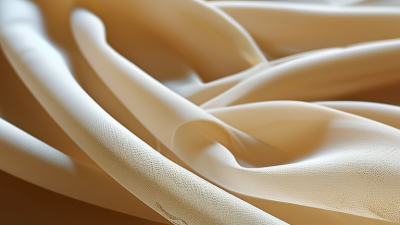
China’s Tencel Polyester manufacturers are attracting attention as brands seek softer, lighter, and more responsible textiles. Tencel Polyester usually combines regenerated cellulosic fibers with polyester. The blend can improve drape, strength, drying speed, and everyday durability.

The market is large, but its environmental questions are equally significant. Textile Exchange’s Materials Market Report 2024 estimated global fiber production at about 124 million tonnes in 2023. Polyester represented roughly 57% of that volume. The report also expects total production to approach 160 million tonnes by 2030. These figures explain why material selection cannot rely on appearance alone.

Professor Seshadri Ramkumar, a textile-materials expert at Texas Tech University, often reminds industry audiences, “Sustainability is not a destination; it is a journey.” His point matters when comparing Chinese suppliers. A credible factory should explain fiber composition, Tencel™ sourcing, recycled polyester content, dyeing controls, testing procedures, and wastewater management. Lenzing’s annual and sustainability reports also stress traceability and responsible production for branded TENCEL™ fibers.

This guide examines China’s leading Tencel Polyester fabric manufacturers through practical criteria. These include fabric consistency, certification evidence, minimum order quantities, sampling speed, export experience, and finishing capability. A clean showroom can be impressive. It proves very little.

Some supplier claims still require careful verification. Certificates may cover only one product line, not every factory process. Blended fabrics can also complicate recycling at the end of use. Therefore, buyers should request current test reports, transaction samples, and written chain-of-custody documents before placing large orders. The best manufacturer is not always the cheapest. It is the one that can provide clear evidence repeatedly.
China Top Tencel Polyester Fabric Manufacturers?

What Is Tencel Polyester Fabric?

Tencel polyester fabric is a blended textile made from regenerated cellulose fiber and polyester. The cellulose portion feels smooth and cool against the skin. Polyester adds strength, shape retention, and faster drying. Together, they create fabric with a balanced hand feel. It is not the same as pure cellulose fabric.

The blend ratio changes its performance. A higher cellulose content usually improves softness and moisture absorption. More polyester can increase durability and reduce wrinkling. In a 160–220 GSM fabric, the surface may suit shirts, dresses, or lightweight uniforms. In practical fabric evaluation, check the fiber content, weight, width, and finishing process. Touch alone can mislead.

It dries quickly.

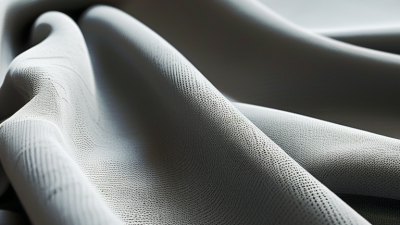
Look closely at the surface. Fine fibers should lie evenly, without harsh shine or loose fuzz. Rub testing can reveal pilling risks. Washing tests should measure shrinkage, color change, and drying time. Use moderate heat during care. Excessive heat may affect the cellulose component and distort the fabric shape.

However, this fabric is not perfect. Some blends feel less breathable than expected, especially with dense construction or heavy finishing. Moisture movement also depends on yarn size and weave, not only fiber type. Manufacturers should request laboratory data before selecting fabric for large production. A small sample can look excellent, yet behave differently after repeated washing.
Why Choose Chinese Tencel Polyester Fabric Manufacturers?

Chinese Tencel polyester fabric manufacturers offer strong sourcing advantages because China combines large-scale fiber production with mature weaving and dyeing infrastructure. Textile Exchange’s Materials Market Report 2024 estimates global fiber production reached 124 million tonnes in 2023, with polyester representing about 57%. China remains a major contributor to this supply chain. Its National Bureau of Statistics reported chemical-fiber output above 70 million tonnes in 2023. This scale can support stable capacity, competitive pricing, and faster development of blended fabrics.

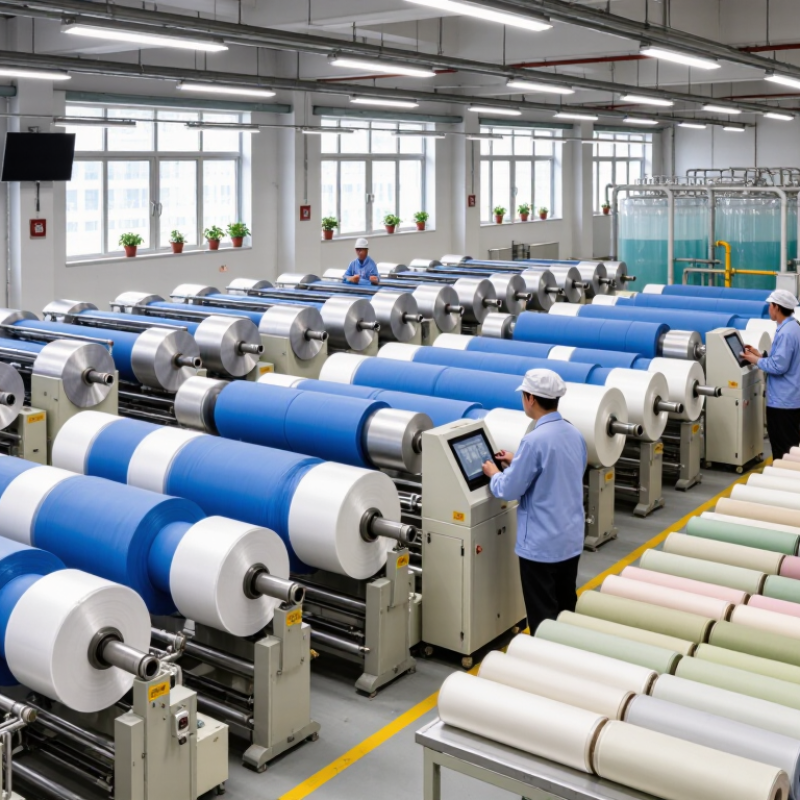
The practical advantage appears on the factory floor. Buyers can request a soft regenerated-cellulosic face, recycled polyester content, tighter pilling control, or a 150 cm finished width from one production network. Samples may arrive with clear GSM readings, color cards, shrinkage tests, and washing results. Good manufacturers also provide fiber-content verification through independent laboratories and follow recognized quality systems such as ISO 9001. Ask for test reports, not promises.

There are weaknesses, too. Large capacity does not guarantee careful finishing. Some suppliers communicate well but document poorly. A 2024 Textile Exchange report also shows recycled polyester still depends heavily on PET bottle feedstock, so traceability deserves attention. My own sourcing experience suggests checking three sample lots, not one. Small shade differences can appear after bulk dyeing. That part is easy to underestimate.

How to Identify Reliable Manufacturers in China

Finding a dependable Tencel-polyester fabric manufacturer in China requires more than comparing online prices. A polished catalog proves little. During factory evaluations, I ask for a current business license, production address, and a video call from the weaving floor. Reliable suppliers explain fiber ratios, fabric weight, width, shrinkage, and finishing methods without vague promises. Ask for test reports from an independent laboratory when performance matters.

Request a physical sample, not only digital photographs. Check the hand feel, color consistency, edge stability, and surface after washing. For Tencel-polyester blends, confirm the exact composition through testing; labels and invoices should match. Small differences can affect dye uptake and cutting efficiency. One missed detail can become thousands of meters. A dependable manufacturer shares batch records, inspection procedures, and realistic lead times. They should describe how defects are isolated and corrected.

Communication is another practical test. Send the same technical sheet to several factories and compare their questions. Experienced teams ask about yarn count, weave structure, tolerances, and intended use. Be cautious when a quotation is dramatically lower than the market range. It may reflect different raw materials, weaker inspection, or hidden finishing charges. Still, no checklist is perfect. Factories can pass an audit and later struggle with peak-season capacity. Use a small trial order, written specifications, and staged quality checks before committing to regular production.

What Production Standards and Certifications Matter?

China’s leading lyocell-polyester fabric manufacturers should prove production discipline, not only offer attractive swatches. Textile Exchange’s Materials Market Report 2024 recorded 124 million tonnes of global fibre production in 2023. Polyester remained the dominant fibre, increasing the need for traceable inputs and controlled processing. Ask for batch records, fibre composition tests, colorfastness results, and shrinkage data. A factory should also explain how it controls temperature, humidity, wastewater, and chemical storage. Small details matter.

Reliable certification adds evidence. ISO 9001 indicates a documented quality-management system, while ISO 14001 addresses environmental management. OEKO-TEX Standard 100 testing can verify harmful-substance limits for finished fabric and components. For recycled polyester, the Global Recycled Standard can support recycled-content and chain-of-custody claims. FSC or PEFC documentation may help verify responsibly sourced wood for cellulosic fibres. Textile Exchange’s 2024 report also highlighted the industry’s continuing dependence on virgin polyester, so recycled-content claims deserve careful checking.

Certificates can expire. Verify the certificate number, scope, factory address, and audit date directly with the issuing body. Request third-party test reports from the actual production batch, not only a sales sample. This is where buyers often miss risk. A certified facility may still deliver uneven shade or excessive pilling if process controls are weak. I would require a pilot lot, wash it repeatedly, and compare results against the agreed specification. Certification is useful, but it is not perfection.

China Top Tencel Polyester Fabric Manufacturers? - What Production Standards and Certifications Matter?

Standard or Certification Primary Purpose What It Covers Relevance to Lyocell–Polyester Fabric Evidence to Request Priority Verification Point
OEKO-TEX® STANDARD 100 Tests finished textile products for harmful substances. Yarns, fabrics, accessories, dyes and other components, with testing requirements based on the product’s intended use. Important for fabrics used in apparel, underwear, babywear, home textiles and skin-contact products. Valid certificate, certificate number, product class, tested article description and issuing institute. High Confirm that the certificate covers the exact fabric construction, color range or article group being supplied.
Global Recycled Standard (GRS) Verifies recycled materials and responsible processing through the supply chain. Recycled input, chain of custody, social requirements, environmental practices and chemical restrictions. Useful when the polyester portion contains post-consumer or post-industrial recycled polyester. Scope certificate, transaction certificate for the shipment, recycled-material percentage and material type. High GRS certification generally requires at least 50% recycled content for a product to qualify for GRS labeling claims.
Recycled Claim Standard (RCS) Tracks and verifies recycled content through the supply chain. Recycled input and chain of custody; it does not provide the broader social and environmental requirements of GRS. Suitable when the main requirement is traceable recycled polyester content rather than a broader processing standard. Valid scope certificate, transaction certificate and declared recycled content percentage. High RCS has a minimum recycled-content threshold of 5%; verify whether the buyer requires RCS 100 or RCS Blended.
FSC or PEFC Chain of Custody Supports responsible sourcing and traceability of forest-based raw materials. Wood and forest-derived inputs, including eligible cellulosic fiber feedstocks when covered by the certificate. Relevant to lyocell-type fibers made from responsibly sourced wood pulp; it does not certify the polyester component. Certificate scope, fiber or pulp supplier documentation, transaction records and product claim details. High Check whether the specific cellulosic fiber content is covered instead of accepting a general mill-level certificate.
ISO 9001:2015 Establishes a quality-management system. Documented processes for customer requirements, production control, corrective action and continual improvement. Helps control shade consistency, fabric weight, width, tensile strength, shrinkage and defect rates. Certificate issued by an accredited certification body, scope of certification and latest audit status. High Ensure the certification scope includes textile manufacturing or fabric processing, not only trading activities.
ISO 14001:2015 Provides an environmental-management framework. Environmental aspects, legal compliance, resource use, waste, emissions and continual improvement. Relevant to dyeing, finishing, wastewater management, energy consumption and chemical-control procedures. Current certificate, certification scope, site address and environmental objectives or audit records. High Verify that the certificate covers the actual dyeing, finishing or manufacturing facility used for the order.
ISO 50001:2018 Manages and improves energy performance. Energy baselines, energy monitoring, operational controls and efficiency improvement plans. Particularly relevant to energy-intensive dyeing, drying, heat-setting and finishing operations. Valid certificate, site scope, energy-performance objectives and recent energy-monitoring records. Medium Use it as supporting evidence; it does not independently confirm fabric quality or recycled content.
ZDHC MRSL Conformance Controls hazardous chemical inputs used in textile and footwear production. Restricted substances in chemical formulations used during pretreatment, dyeing, printing and finishing. Helps reduce chemical risks in blended fabrics and supports safer wet-processing operations. Approved chemical inventory, supplier declarations, conformance certificates and wastewater test reports where available. High Distinguish chemical-input conformance from finished-product testing; both may be needed for buyer requirements.
REACH Compliance Addresses chemical-safety obligations for products placed on the European market. Substances of Very High Concern, restricted chemicals and applicable obligations for articles and mixtures. Important for EU-bound fabrics, especially dyed, printed, coated or chemically finished materials. Recent laboratory test reports, restricted-substance declarations, supplier chemical data and SVHC review. High Testing should reflect the final fabric, including dyes, coatings, prints, finishes, elastane or other accessories.
AATCC, ASTM or ISO Fabric-Test Methods Provides standardized methods for measuring physical and color-performance properties. Fabric weight, width, tensile strength, tear strength, pilling, colorfastness, dimensional stability and abrasion. Allows objective comparison of blended fabric performance across suppliers and production lots. Pre-production approval report, bulk inspection report, laboratory accreditation details and agreed test methods. High Agree on the exact test method, conditioning requirements, acceptance limits and sampling plan before bulk production.
Social Compliance Audit Assesses labor, health, safety and workplace-management practices. Working hours, wages, forced labor, child labor, occupational safety, grievance systems and management procedures. Supports responsible sourcing decisions when production involves spinning, weaving, knitting, dyeing or finishing sites. Recent third-party audit report, corrective-action plan, site identity and follow-up closure evidence. Medium An audit report is site-specific and time-sensitive; confirm the production facility and audit date.
Production Traceability Documentation Links raw materials, processing steps and finished goods to a defined production order. Fiber origin, yarn lot, greige fabric, dye lot, finishing batch, inspection records and shipment documents. Reduces the risk of substituted fibers, mixed lots, inconsistent shades or unsupported sustainability claims. Purchase records, batch cards, lot numbers, dyeing records, inspection reports and shipment-level certificates. High Traceability should connect the certified material to the exact purchase order and delivered fabric lot.

Note: Certification applicability depends on the product composition, destination market, processing route and buyer specifications. Certificates should be checked for validity, issuing body, site address, scope and the exact fabric or shipment covered.

How to Select the Right Manufacturer for Your Needs

Selecting a reliable lyocell-polyester fabric manufacturer requires more than comparing quotations. Textile Exchange’s Materials Market Report 2024 estimates global fiber production reached 124 million tonnes in 2023. Polyester represented about 57% of output. This scale creates many suppliers, but not all offer consistent blending or traceability.

Ask for evidence. Request fiber-content test reports, colorfastness results, shrinkage data, and pilling performance. A qualified laboratory should verify the declared lyocell and polyester percentages. Also check whether the supplier can provide chain-of-custody documents and recycled-content certificates when needed. The Global Recycled Standard and OEKO-TEX testing are useful reference points, but certificates must match the actual factory and production site. Often missed.

Evaluate production details before signing. Confirm minimum order quantities, sample approval procedures, monthly capacity, dyeing equipment, and lead times. A 65/35 blend may feel smooth in a sample but behave differently after bulk finishing. Test washing, abrasion, seam movement, and shade variation under real-use conditions. Samples reveal problems. A low price can hide weaker yarns, rushed inspection, or unstable finishing. No checklist is perfect. Recheck technical assumptions with an independent inspection agency, especially when the supplier avoids clear answers or changes specifications during negotiation. According to Textile Exchange, polyester demand remains closely tied to the wider apparel market, so capacity alone should not determine your choice; process control and documented quality matter more.

Subscribe To Our Newsletter

For inquiries about our products or pricelist, please leave your email to us and we will be in touch within 24 hours.