China Best Polyester Water Resistant Fabric Suppliers?

Choosing reliable China Best Polyester Water Resistant Fabric Suppliers requires more than comparing prices or browsing attractive product photos. A dependable supplier should demonstrate consistent fabric quality, responsive communication, and practical knowledge of textile production. For buyers seeking Polyester Water Resistant materials, details such as coating durability, fabric weight, tear strength, breathability, and colorfastness matter greatly. A fabric that looks smooth under showroom lighting may perform poorly after repeated washing or outdoor exposure.

Experienced sourcing teams often request samples before placing larger orders. They may test water repellency with controlled spray tests, inspect the reverse side for coating uniformity, and compare laboratory reports with actual fabric performance. Supplier audits can also reveal important details, including production capacity, quality-control procedures, export experience, and traceability of raw materials. Certifications should be verified through valid documents rather than accepted as marketing claims. Small signs matter.

This guide introduces practical methods for evaluating Chinese suppliers and selecting fabrics for jackets, workwear, bags, tents, and other applications. It considers customization, minimum order quantities, lead times, packaging, and after-sales support. However, no supplier is perfect, and even strong factories may show inconsistent results between batches. Buyers should define performance requirements clearly and record every approved specification. A careful decision may take longer. That is usually worthwhile. Reliable Polyester Water Resistant fabric begins with evidence, not assumptions.
China Best Polyester Water Resistant Fabric Suppliers?

What Is Polyester Water-Resistant Fabric?

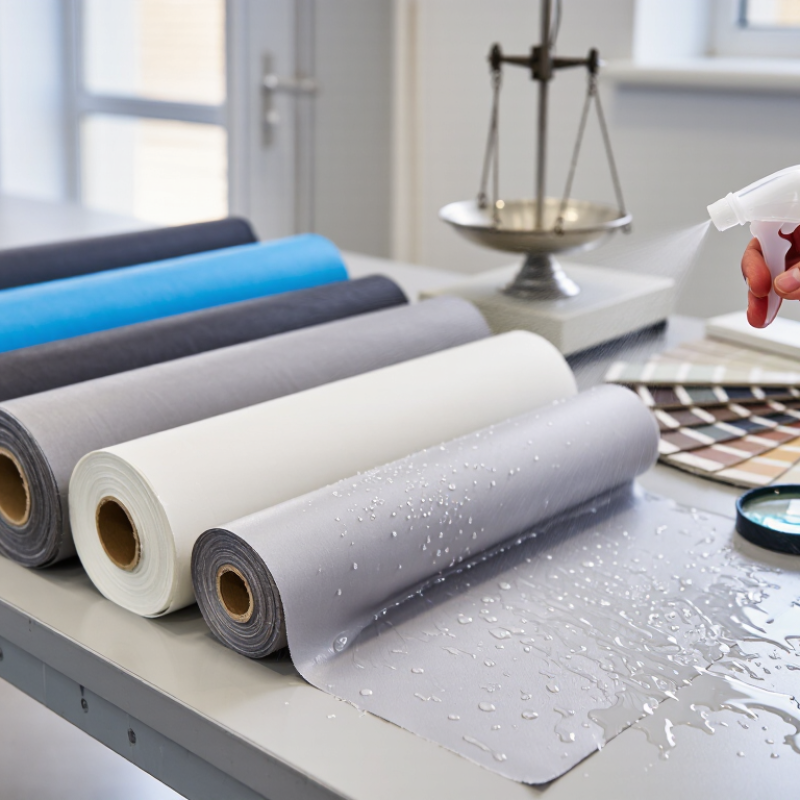
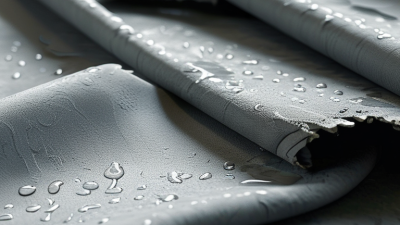
Polyester water-resistant fabric is a polyester textile designed to slow water penetration. Unlike waterproof fabric, it usually resists light rain rather than prolonged immersion. Manufacturers create this performance through tight weaving, surface coatings, or both. Water beads on the surface. Droplets roll away instead of soaking in immediately. Common constructions include plain weave, ripstop, and oxford fabric. Yarn density, fabric weight, and coating thickness influence the result.

In practical sourcing, fabric performance should be checked beyond a product description. A reliable supplier can provide test data for water repellency, hydrostatic pressure, abrasion resistance, and colorfastness. Ask whether the fabric keeps its finish after washing. Some coatings perform well at first, then weaken after repeated cleaning. That detail is easy to overlook. A fabric may feel strong but still leak through stitching or needle holes. Seam tape or careful seam sealing may be necessary for outdoor products.

Polyester water-resistant fabric suits rain jackets, bags, outdoor covers, workwear, and travel accessories. A tightly woven 300D fabric can feel firm under the hand, while a lighter 75D option folds easily into a backpack. Breathability remains an important trade-off. A dense coating can improve water resistance but may trap heat during movement. In real use, a jacket that blocks rain but feels clammy can become uncomfortable quickly. Water resistance is also not permanent; friction, detergent, sunlight, and bending gradually reduce performance. Supplier claims should be compared with independent testing and the product’s actual working conditions.
What Is Polyester Water-Resistant Fabric?

Polyester water-resistant fabric is a polyester textile designed to slow water penetration through tighter construction, a durable water-repellent finish, or a waterproof coating. The chart shows the water-column equivalent of common hydrostatic-head test pressures.

How to read it: A higher hydrostatic-head value generally indicates stronger resistance to water pressure in a controlled laboratory test. Actual performance also depends on fabric construction, coating quality, seam sealing, washing, and abrasion. Conversion basis: 1 kPa is approximately 102 mm H₂O at standard gravity.

How Is Water-Resistant Polyester Fabric Manufactured?

China Best Polyester Water Resistant Fabric Suppliers?

Water-resistant polyester fabric begins with carefully prepared polyester chips. Manufacturers melt the chips and extrude them into continuous filaments. The filaments are stretched, textured, and woven or knitted into fabric. Tight construction helps reduce water penetration. It does not make the material fully waterproof.

The fabric then receives a surface treatment, often a durable water-repellent finish. The chemical bath must spread evenly across every yarn. Padding rollers remove excess liquid and control the application rate. Heat curing bonds the finish to the fibers. Temperature, fabric speed, and moisture levels require close monitoring. Small errors can create patchy protection.

Testing follows production. Technicians check spray resistance, hydrostatic pressure, abrasion, colorfastness, and washing durability. A fabric may repel fresh rain but lose performance after repeated laundering. That weakness deserves attention. Suppliers should record chemical batches, curing temperatures, and test results for each production lot. Clear records support consistent quality and safer purchasing decisions.

The process sounds simple. It is not. Fabric density, seam design, and storage conditions also affect real-world performance. A thoughtful manufacturer should explain these limits instead of promising absolute waterproofing. Suppliers with reliable laboratories and experienced technicians can adjust the finish for outdoor clothing, bags, or lightweight covers. Even then, performance can vary. That is why independent testing remains valuable.

China Best Polyester Water Resistant Fabric Suppliers? - How Is Water-Resistant Polyester Fabric Manufactured?

Category Evaluation Dimension Typical Technical Reference Why It Matters Common Test or Verification Method
Material Selection Fiber polymer Polyethylene terephthalate (PET), a thermoplastic polyester Provides strength, dimensional stability, and resistance to many common chemicals Fiber composition analysis and supplier technical documentation
Fabric construction Woven, knitted, or laminated construction; plain weave and ripstop are frequently used for outerwear and bags Affects tear strength, drape, air permeability, and coating suitability Fabric construction inspection and microscopic analysis
Fabric weight Common commercial ranges are approximately 60–300 g/m², depending on the end use Higher weight can improve coverage and durability but may reduce lightness and packability Mass per unit area measurement, such as ISO 3801
Yarn characteristics Filament or spun yarn; denier, yarn count, twist, and texture should be specified Controls surface appearance, softness, tensile performance, and fabric density Yarn linear-density testing and construction analysis
Recycled content May include mechanically or chemically recycled PET; the percentage should be verified by documentation Supports recycled-content claims while traceability confirms material accuracy Chain-of-custody records and an applicable recycled-content certification
Manufacturing Process Polymer preparation PET chips are dried before melt processing to reduce moisture-related degradation Improves melt stability and helps maintain consistent fiber quality Moisture-control records and production-process monitoring
Melt spinning PET is melted, extruded through spinnerets, cooled, and formed into continuous filaments Determines filament uniformity and the base strength of the yarn Denier variation, filament inspection, and tensile testing
Drawing and texturing Filaments are stretched to orient polymer molecules; texturing may add bulk, elasticity, or a matte appearance Influences strength, handle, recovery, and visual texture Yarn tensile properties, elongation, and appearance inspection
Weaving or knitting Yarns are converted into fabric using the selected construction, density, and width specifications Fabric density and construction affect water entry, tear resistance, and dimensional stability Ends and picks per unit length, width, weight, and visual inspection
Water-resistant finishing A durable water-repellent finish may be applied to the surface; a PU or TPU coating can provide a stronger moisture barrier Repellent finishes reduce wetting, while coatings can improve hydrostatic resistance but may reduce breathability Spray rating, hydrostatic pressure, coating add-on, and air-permeability tests
Heat setting and inspection Controlled heat treatment stabilizes dimensions before final inspection, rolling, and packing Reduces shrinkage and helps maintain consistent width and appearance Dimensional-change testing, roll inspection, and defect grading
Performance Requirements Surface water repellency Performance is often specified using a spray-rating grade; the required grade depends on the application Indicates how readily water beads and runs off the fabric surface AATCC 22 or ISO 4920
Hydrostatic resistance Waterproof and water-resistant fabrics may be specified from several hundred millimetres to several thousand millimetres of water pressure Provides a quantitative indication of resistance to water penetration under pressure ISO 811 or AATCC 127
Tensile and tear strength Target values must be matched to the product, such as apparel, outdoor equipment, luggage, or industrial covers Prevents premature failure during handling, sewing, and use ISO 13934-1 for tensile strength and ISO 13937-2 for tear strength
Dimensional stability Specified as percentage change after washing or heat exposure; acceptable limits depend on the finished product Helps control garment fit, panel alignment, and product dimensions ISO 5077 and the applicable care or washing procedure
Colorfastness Requirements normally cover washing, rubbing, perspiration, and light exposure Maintains appearance during laundering, handling, and outdoor exposure ISO 105 series or equivalent recognized test methods
Breathability Air permeability or moisture-vapor performance should be selected according to the intended use Balances wearer comfort with water-resistance requirements ISO 9237 for air permeability or a specified moisture-vapor test
Supplier Qualification Sample approval Confirm color, construction, weight, width, finish, hand feel, and test performance before bulk production Creates a measurable reference for production consistency Approved sealed sample, specification sheet, and laboratory report
Quality-control system Look for documented incoming-material checks, in-process controls, final inspection, and nonconformity handling Reduces variation between production lots Quality manual, inspection records, and production audit
Chemical compliance Specify applicable chemical restrictions, such as limits for restricted substances and fluorinated water-repellent chemistry where required Supports regulatory compliance and end-market requirements Third-party chemical testing and current compliance declarations
Production traceability Each roll should be linked to a batch, production date, material lot, finish recipe, and inspection result Makes quality investigations and repeat ordering more reliable Roll labels, batch records, inspection reports, and retention samples

Note: Technical values are typical reference ranges or evaluation criteria rather than guarantees. Final requirements should be agreed in a product specification and verified through the applicable test methods.

Which Quality Standards Should the Fabric Meet?

When selecting China-based polyester water-resistant fabric suppliers, review measurable quality standards rather than attractive samples. The fabric should meet ISO 4920 or AATCC 22 for surface water repellency. These tests show how water beads on the fabric. They do not prove complete waterproofness.

For rainwear or outdoor covers, request hydrostatic pressure testing under ISO 811. Confirm the test pressure, coating type, and fabric weight. Ask for recent laboratory reports, not only factory declarations. Colorfastness should be checked against ISO 105 standards after washing and rubbing. A bright red fabric that stains a white lining is a practical failure. It happens.

Supplier quality systems also matter. ISO 9001 certification can indicate controlled production, but it cannot replace fabric testing. Check batch records, yarn composition, width tolerance, and coating thickness. Chemical compliance should address applicable restricted-substance requirements, including limits for dyes, heavy metals, and harmful finishes. Request a sample from the actual production lot. Small differences in coating application can change performance. Test it yourself after washing, folding, and light abrasion. A certificate alone is not enough.

A reliable supplier should explain test methods clearly and accept reasonable inspection plans. Ask whether results were produced by an independent laboratory. Some reports may use ideal conditions that do not reflect daily use. That gap deserves attention.

How to Evaluate Chinese Polyester Fabric Suppliers

China Best Polyester Water Resistant Fabric Suppliers?

Choosing a Chinese polyester fabric supplier requires more than comparing online prices. Ask for the fabric composition, GSM, weave structure, coating type, and production capacity. Request a recent sample, not only catalog photographs. Hold it under light and inspect pinholes, uneven dyeing, and weak edges. A reliable supplier should explain its water resistance test method clearly.

Tips: Test samples after washing, folding, and abrasion. Compare hydrostatic pressure results from the same laboratory standard. Check whether production samples match the approved sample. Also confirm minimum order quantities, lead times, packaging details, and replacement terms in writing.

Factory experience matters. Review quality records, inspection procedures, and material traceability. A useful supplier can show how incoming yarn, coating, curing temperature, and final inspection are controlled. Video tours help, but an independent factory audit gives stronger evidence. Ask for relevant certificates and verify their scope and validity. Do not treat every certificate as proof of excellent performance.

Some buyers focus too heavily on low prices. I have found that cheaper fabric can create higher cutting waste and unstable color batches. Still, supplier claims should not be accepted without testing. A small trial order may reveal problems that a polished sales presentation hides. Communication also deserves attention. If technical questions receive vague answers, future production may become difficult. The “best” supplier is usually the one that provides consistent data, responds honestly, and improves after a defect is found.

How to Select the Best Supplier for Your Needs

Selecting the best polyester water resistant fabric supplier requires more than comparing prices. Textile Exchange’s 2024 Materials Market Report recorded global fiber production at about 124 million tonnes in 2023. Polyester remained the dominant fiber. This scale creates many choices, but quality varies sharply between mills. Ask for fabric composition, weight, width, yarn specification, coating details, and batch records. A supplier should provide recent laboratory results, not only a sales sample.

Check water resistance through recognized methods, such as AATCC 22 spray testing or ISO 811 hydrostatic pressure testing. These tests measure different performance factors. A fabric may resist light rain yet fail under pressure or repeated washing. Request test results after washing, abrasion, and heat exposure. For outdoor products, inspect the reverse side, coating uniformity, surface marks, and fabric handle. A clear 300-meter trial order can reveal defects hidden in a small sample.

The supplier’s production discipline matters equally. Review inspection procedures, complaint response time, minimum order quantities, and delivery records. Textile Exchange also reported that recycled polyester represented a significant share of polyester production, so request traceability documents when recycled content is claimed. Do not trust a certificate without checking its scope and validity. A common mistake is choosing the lowest quotation. I have seen low prices become expensive after shade variation, peeling coatings, and delayed replacement. Suppliers should explain limitations honestly. Silence is a warning. Even good testing cannot predict every sewing, storage, or field-use problem. Build a small pilot, record failures, and revise the specification before scaling.

Subscribe To Our Newsletter

For inquiries about our products or pricelist, please leave your email to us and we will be in touch within 24 hours.