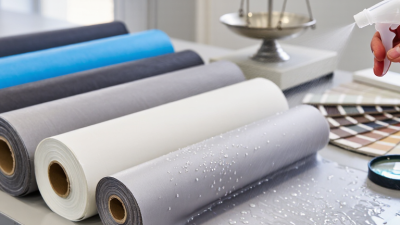
Pure Polyester remains a practical choice for buyers who need dependable color, quick drying, and consistent supply. Yet no fabric suits every product. A crisp lining, a lightweight blouse fabric, and a durable workwear cloth demand different constructions. Buyers should compare fiber content, weave, weight, finish, and test results—not rely on the word “polyester” alone.
Textile sourcing specialist Maya Chen puts the selection challenge this way: “The best fabric is the one whose performance matches its end use, not merely its lowest price.” Use that principle when reviewing these 10 options. A 75D plain weave may feel smooth and pack easily, while a heavier twill can offer more structure. Ask suppliers for swatches, colorfastness data, and care instructions. Check whether the quoted specifications match the sample. Small differences matter.
Some trade-offs are easy to miss. A soft hand can come from finishing, and that finish may change after washing. A glossy surface may look premium under showroom lights but feel less suitable in daily use. Test it. This guide compares fabric types by practical buyer needs, including apparel, lining, home textiles, and promotional products. The rankings are a starting point, not a universal verdict; regional preferences and production capabilities can shift what works. That deserves a second look. Before placing a large order, confirm shade, width, weight, and available quality documentation with the mill.
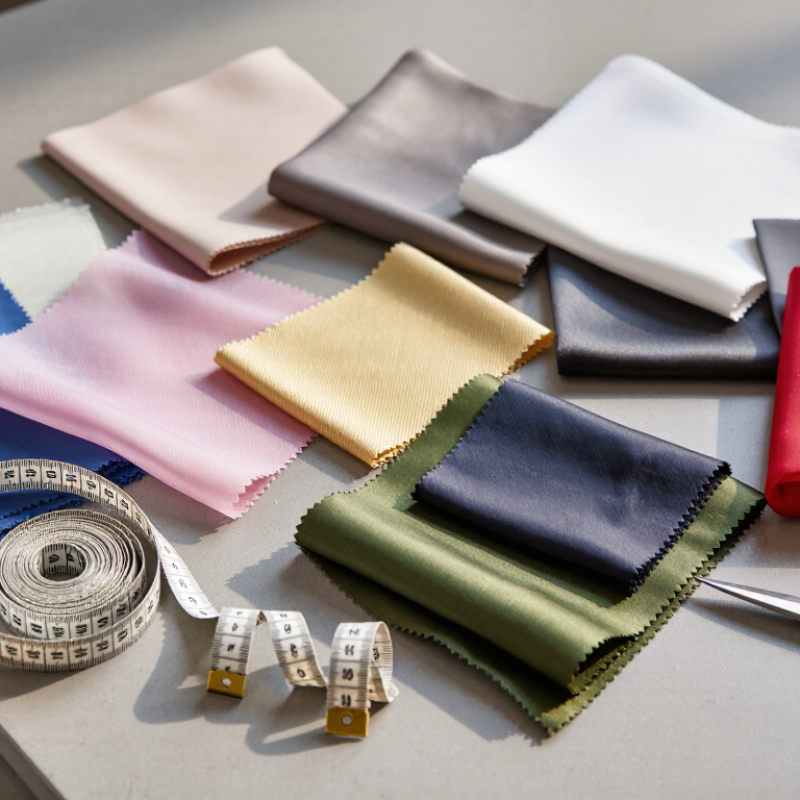
Textile Exchange’s Materials Market Report 2024 estimates that global fiber production reached 124 million metric tonnes in 2023. Polyester accounted for 57%, or roughly 71 million tonnes. A year earlier, its estimated share was 54%, according to Textile Exchange’s 2023 report. That is a substantial shift. For global buyers, it signals broad availability across apparel, lining, home-textile, and industrial fabric supply chains. But production share alone does not prove consistent quality, stable lead times, or responsible sourcing.
The statistic also needs careful reading: it describes fiber output, not the share of finished fabrics made from pure polyester. A roll labeled “100% polyester” can still differ in yarn count, weave density, weight, finish, and colorfastness. Check the technical specification, then compare it with a sample under real use conditions. A lightweight lining may feel smooth in hand but snag under repeated friction. Ask suppliers for test results and lot-to-lot tolerances, not just a swatch. Textile Exchange’s figures are estimates, too; reporting coverage and methodology can affect comparisons between years. The market is large. The details still matter.
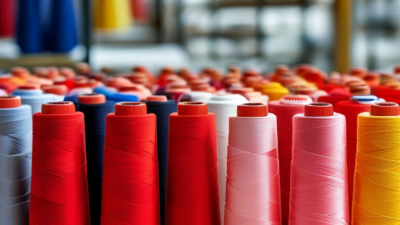
PET is a practical starting point when comparing pure polyester fabrics. Its typical density is about 1.38 g/cm³, while its melting range is commonly around 250–260°C. These figures help buyers understand material weight and heat behavior, but they are not complete performance specifications. Yarn construction, fabric thickness, and finishing can change how a textile handles heat and wear.
The scale is substantial. Textile Exchange’s Materials Market Report 2024 estimates global fiber production reached 124 million tonnes in 2023, with polyester accounting for about 57%. For buyers, that widespread use can mean broad sourcing options, but it does not guarantee consistent quality. Request a technical data sheet, and check whether the stated melting range applies to the exact PET grade. A small mismatch between laboratory values and processing conditions can matter.
Tips: Treat 250–260°C as a reference, not a universal operating setting. Confirm heat limits with the supplier, then test a fabric swatch under your intended process. Look closely for distortion, shrinkage, or changes in hand feel. Density helps with comparisons; it cannot predict comfort by itself. These numbers are useful, though they leave some questions unanswered.
Classifying ten pure-polyester fabrics takes two steps: identify the fiber form, then the construction. Filament yarns create smooth, continuous surfaces; staple yarns feel more like spun cotton. Among woven options, filament satin has a glossy face, chiffon is airy, taffeta holds a crisp shape, and georgette has a pebbled drape. Staple-polyester poplin feels compact, while twill shows diagonal ribs. The four knit examples are jersey, interlock, tricot, and mesh. Jersey stretches easily; interlock feels denser, tricot lies flat, and mesh has visible openings. These are useful distinctions, but finishes can blur them.
Scale matters to buyers. Textile Exchange’s Materials Market Report 2024 estimates that polyester made up 57% of global fiber production in 2023, out of 124 million tonnes. That figure describes fiber output, not the share of pure-polyester fabrics available in every market. A fabric’s name alone is not enough. Check the specification sheet for filament or staple yarn, knit or woven construction, weight, and finish. Two “polyester satins” can handle very differently.
Tips: Request a swatch and test it under your intended lighting. Scrunch it, check recovery, and inspect the reverse. For mesh or tricot, confirm the opening size and stretch direction; small details can change garment performance.
| Fabric | Yarn Type | Construction | Typical Weight | Common Characteristics | Typical Applications | Buyer Checks |
|---|---|---|---|---|---|---|
| Polyester Chiffon | Continuous filament | Woven; commonly plain weave with tightly twisted yarns | About 50–100 g/m² | Lightweight, sheer, and fluid, with a slightly textured surface | Blouses, scarves, dresses, and overlays | Check transparency, snag resistance, color consistency, and whether the fabric is heat-set. |
| Polyester Satin | Continuous filament | Woven; satin weave with a smooth face | About 80–180 g/m² | Smooth, lustrous face; drape and durability vary with yarn and weave density | Apparel, linings, decorative textiles, and accessories | Confirm face/back appearance, surface snagging, colorfastness, and finish durability. |
| Polyester Taffeta | Continuous filament | Woven; typically plain weave | About 50–120 g/m² | Lightweight, crisp, and relatively smooth; often used where shape and a slight rustle are desired | Linings, lightweight jackets, umbrellas, and event décor | Ask about coating or calendering, crease behavior, and the intended water-resistance level. |
| Polyester Microfiber Fabric | Very fine continuous filament | Woven; commonly plain or twill weave | About 70–180 g/m² | Soft hand and a dense surface; performance depends on filament fineness and finishing | Apparel, cleaning cloths, bedding, and lightweight outerwear | Verify filament specification, absorbency claims, surface finish, and abrasion performance for the end use. |
| Polyester Tricot | Continuous filament | Warp knit | About 60–180 g/m² | Lightweight, smooth, and generally less prone to laddering than many simple weft knits | Linings, sportswear, lingerie, and lightweight garment panels | Check stretch and recovery, run resistance, opacity, and dimensional stability after washing. |
| Polyester Poplin | Spun staple yarn, or filament yarn depending on specification | Woven; plain weave with a fine ribbed appearance | About 90–180 g/m² | Light to medium weight, smooth, and suitable for structured shirts and uniforms | Shirts, uniforms, workwear, and lightweight home textiles | Specify yarn type, fabric width, finishing, and colorfastness; poplin naming can cover different constructions. |
| Polyester Twill | Spun staple yarn or continuous filament | Woven; twill weave with diagonal ribs | About 150–300 g/m² | Typically more substantial than lightweight plain-weave fabrics; the diagonal weave gives a distinctive face | Trousers, uniforms, workwear, bags, and upholstery applications | Confirm weave density, weight, abrasion requirements, and whether a coating or water-repellent finish is applied. |
| Polyester Single Jersey | Usually spun staple yarn; filament versions are also available | Weft knit; single jersey | About 120–220 g/m² | Flexible and comfortable against the skin; edges may curl, depending on construction and finish | T-shirts, sportswear, casualwear, and sleepwear | Check stretch recovery, spirality, pilling, and shrinkage after laundering. |
| Polyester Interlock | Spun staple yarn or continuous filament | Double-knit weft knit; interlock structure | About 180–300 g/m² | Usually smoother and more stable than single jersey, with a similar appearance on both sides | Tops, dresses, activewear, and infant garments | Request finished width and weight, and test stretch, recovery, pilling, and dimensional stability. |
| Polyester Fleece | Usually spun staple yarn | Knitted base fabric, commonly brushed on one or both sides | About 180–350 g/m² | Soft, insulating, and lightweight for its warmth; brushing can increase surface lint | Pullovers, jackets, blankets, and cold-weather accessories | Check pilling, shedding, brushing quality, anti-static needs, and any applicable recycled-content or care requirements. |
Textile Exchange’s Materials Market Report 2024 estimates global fiber production reached 124 million tonnes in 2023, with polyester accounting for 57%. Scale makes specification discipline essential. ASTM D1909 lists polyester’s commercial moisture regain at 0.4%; this is a reference value, not a guarantee of finished-fabric behavior. A buyer comparing taffeta, chiffon, satin, crepe, mesh, fleece, jersey, lining, canvas, and microfiber should confirm test conditions and finishing details. Small differences matter.
GSM describes fabric mass per square metre; denier describes yarn linear density. They are not interchangeable. A 75-denier yarn can form a light lining or a heavier fabric, depending on construction. Compare GSM and denier together, then check weave or knit, width, and dimensional stability. For instance, lightweight chiffon may suit drape, while higher-GSM fleece offers more body. Feel the swatch.
Finishes can change hand, sheen, abrasion behavior, and drying performance, so “pure polyester” alone is an incomplete specification. Request the finish type, test method, tolerance, and a production sample. Check GSM across several points; rolls can vary. ASTM D1909 helps standardize regain comparisons, but it does not predict comfort in every climate. I would not rank fabrics by one number alone. Moisture regain is useful, yet it says little about wicking, airflow, or how a garment feels after hours of wear.
For buyers comparing pure polyester fabrics, ASTM D5034 provides a practical measure of breaking strength and elongation. In the grab test, a specimen is pulled until it breaks, with the central area carrying the load. Ask for results in both fabric directions when relevant, plus the test method, conditioning details, sample count, and reported units. A number without context can mislead. Fabric weight, weave, yarn construction, and finishing all affect the result, so compare samples made and tested under similar conditions. Small details matter.
AATCC 61 evaluates colorfastness during accelerated laundering under specified test conditions. Depending on the selected option, temperature, detergent, bleach, and agitation can differ. The report should identify the option used and include ratings for color change and staining. Do not treat an accelerated result as a direct promise of performance after a fixed number of household washes. Not a guarantee. Request testing on fabric from the intended production lot, especially when shade consistency matters. I would not rely on either test alone: a fabric may meet a strength target yet still show unwanted shade change, or perform well in washing while feeling too light for its use. Lab evidence is useful, but the test setup needs to match the buyer’s actual application.